 Sudden Valley Siding
 Window Replacement for Deming Homes
Deming sits in the wooded, water-adjacent stretch of Whatcom County where homes take a steady beating from moisture — driving rain off the foothills, humid air that never fully dries out under the tree canopy, and the long moss season that follows anything shaded and damp for more than a few weeks a year. Windows are one of the first places that shows up. Old seals fog, wood sashes swell and stick, and trim boards around the frame start holding moisture instead of shedding it. If you're noticing any of that, it's usually not a cosmetic problem — it's a sign the window's job of keeping water and air out has already started to fail.
We do window replacement work throughout the Sudden Valley and greater Whatcom County area, and Deming's mix of older homes, cabins, and newer builds tucked under tree cover gives us a good read on what actually holds up here versus what looks fine for a season or two and then doesn't.
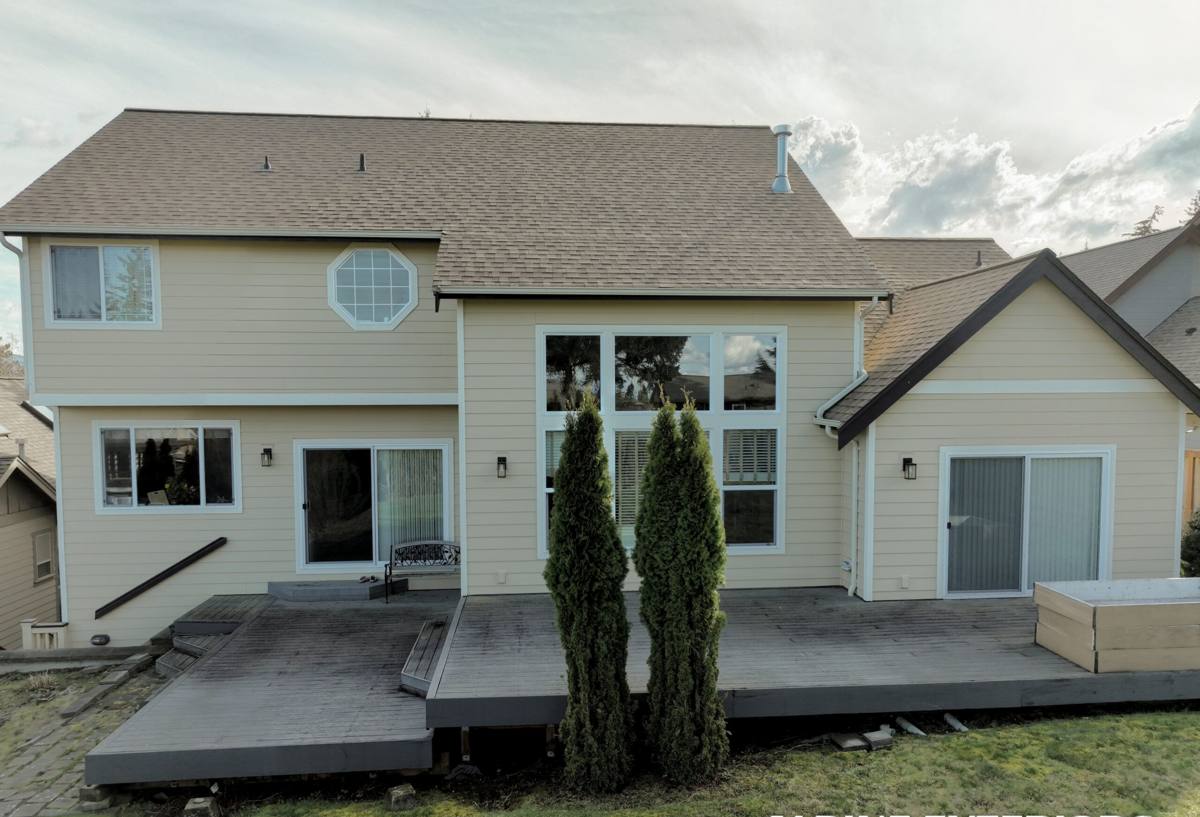
Signs a Deming Home Needs New Windows
Not every window problem means full replacement — sometimes it's a caulking or flashing fix. But a few signs point to the window itself being past the point of patching:
- Fogging or a visible haze between panes — the seal has failed and the gas fill (or the air gap) is gone
- Wood sashes or sills that are soft, swollen, or hard to open and close
- Visible gaps, drafts, or cold spots you can feel standing next to the window in winter
- Paint that keeps failing on the interior or exterior trim no matter how often it's redone
- Moss or dark streaking building up on the sill or exterior trim faster than the rest of the siding
- Condensation forming on the inside of the glass regularly, especially in bathrooms and kitchens
In a climate that stays damp as long as ours does, a compromised seal or a soft sill doesn't stay a small problem. Moisture that gets behind the frame has months at a time to work on the sheathing and framing before things dry out again.
What a Correct Window Replacement Actually Involves
The window itself is only part of the job. Most window failures we see in this region trace back to installation, not the product — flashing that was skipped or done out of order, gaps packed with the wrong material, or a nailing fin that was never properly sealed to the wall's water-resistive barrier. Get that wrong and even a good window will eventually leak.
The sequence that matters
A correct install follows a shingle-style water path — every layer overlaps the one below it so water is always directed outward and down, never trapped behind the frame. That means:
- Removing the old window and checking the rough opening and sill for hidden rot before anything new goes in
- Repairing or replacing any damaged framing or sheathing found during removal — not covering it up
- Installing sill pan flashing so any water that does get past the window drains back out, not into the wall
- Setting the new window level, plumb, and square, with proper shimming so it isn't relying on fasteners alone to hold shape
- Flashing the head, jambs, and sill in the correct overlap order, tied into the house wrap
- Sealing the interior air barrier separately from the exterior water barrier — these are two different jobs, not one bead of caulk
- Insulating the gap around the frame properly, without overpacking it, which can bow the frame
If a crew skips the sill pan or seals things out of order, you may not see a problem for a year or two — but in a climate with this much rain and shoulder-season humidity, it tends to catch up.
Choosing the Right Window for Deming's Conditions
Frame material matters more here than in a drier climate, mostly because of how each one handles sustained moisture and temperature swings rather than the occasional storm. Here's how the common options generally compare for a home in this area:
| Frame Material | How It Handles Local Moisture | Maintenance | General Cost Tier |
|---|---|---|---|
| Vinyl | Won't rot or absorb water; performs consistently in damp, shaded settings | Low — occasional cleaning, no painting or sealing | Lower to mid |
| Fiberglass | Very stable through wet-dry and hot-cold cycles; strong moisture resistance | Low — durable finish, rarely needs attention | Mid to higher |
| Wood (clad exterior) | Exterior clad layer protects against rain; interior wood adds warmth but needs the clad seal to stay intact | Moderate — watch clad seams and any exposed wood | Higher |
| Solid wood | Attractive but most vulnerable to swelling, rot, and paint failure in constant damp/shade | High — regular repainting and sealing required | Mid to higher (plus upkeep) |
| Aluminum | Durable but conducts cold and can condense heavily in our humid winters unless thermally broken | Low, but condensation issues if not thermally broken | Varies |
We'll walk through what makes sense for your specific exposure — how much sun and wind the wall gets, how close the tree canopy sits, and what the rest of your exterior is doing — rather than pushing one material for every job. As a professional standard, we're honest with clients about the trade-offs: solid wood looks great but asks for real upkeep in a climate this wet, and unbroken aluminum frames tend to sweat inside during our cold, damp winters. Those aren't defects in the product, just realities worth knowing before you choose.
Glass and glazing
Double-pane, low-E glass is the standard baseline for this climate and handles our temperature swings and moisture well. Triple-pane adds insulation value and sound dampening, which is worth considering for homes further from the road noise trade-off or for owners wanting the lowest possible heating bills — but it adds cost and weight, so it's not automatically the right call for every opening.
Our Process: Estimate to Cleanup
We keep the process straightforward and try not to waste your time with runaround:
- Free on-site estimate. We look at your existing windows, check for any hidden moisture or framing issues, and measure openings.
- Straight recommendation. We tell you what we'd actually do on our own house — no upsell for the sake of it.
- Written scope and price. You know what's included before work starts, not after.
- Removal and inspection. Old windows come out and we check the rough opening for rot or damage before anything new goes in.
- Proper installation. Flashing, shimming, sealing, and insulation done in the correct order — the part that actually determines whether the window performs in ten years.
- Interior and exterior finish work. Trim, caulking, and paint or stain matched to the rest of the home.
- Site cleanup and walkthrough. We haul away the old windows and debris and walk you through the finished work.
Why a Crew That Already Works in Deming Matters
Working regularly in this part of Whatcom County means we've already seen how the local conditions play out over time — which wall orientations take the worst of the driving rain, where moss builds up fastest under tree cover, and how humid it can stay for weeks even when it's not actively raining. That's useful information when it comes to flashing details, drainage planning, and picking materials that won't need premature attention.
It also means we're not learning on your house. A crew unfamiliar with this climate might install a window correctly for a drier region and still leave it vulnerable to the kind of sustained damp exposure that's normal here. We build every install around the assumption that water will find its way to the window eventually — the goal is making sure it always has somewhere to go besides your wall cavity.
Cost Factors to Expect
Every home and opening is different, so exact pricing depends on the site visit, but the main factors that move the number are consistent:
- Number of windows and their size
- Frame material chosen (vinyl, fiberglass, clad wood, etc.)
- Glass package — standard double-pane low-E versus triple-pane or specialty coatings
- Condition of the rough opening — hidden rot or framing repair adds time and material
- Whether it's a straightforward replacement into an existing opening or a resize/structural change
- Trim and finish work needed to match the rest of the exterior
We'll break down the real drivers for your project during the estimate rather than quoting a number over the phone without seeing the openings.
After Installation: What to Watch For
A correctly installed window shouldn't need much from you, but a little attention goes a long way in this climate:
- Wipe down sills periodically, especially shaded windows prone to moss and algae buildup
- Check that weep holes on vinyl and fiberglass frames stay clear of debris so water can drain
- Keep an eye on exterior caulking lines for cracking or separation over the years
- Trim back vegetation that shades a window heavily and keeps it from drying between rains
- Note any new condensation between panes — it's the clearest sign of a failed seal down the road
If your windows are drafty, fogged, or just past their working life, we're happy to take a look and give you a straight, no-pressure estimate for what it would take to fix it right. Fill out the form below and we'll get in touch to schedule a visit.