 Sudden Valley Siding
 Why Decks in Yew Street Wear Out Faster Than You'd Expect
Most decks in the Yew Street area of Sudden Valley don't fail because the wood was bad or the builder was careless. They fail because Whatcom County's climate is genuinely hard on exterior wood structures, and a deck built to look good on installation day isn't automatically built to survive fifteen wet winters. Long stretches of driving rain, humid air that carries salt inland from the Sound, and a moss season that can run half the year all work on a deck at once — soaking end grain, staining and softening boards, and quietly rotting the framing underneath long before the surface looks bad enough to worry about.
That combination is why we treat deck replacement in this neighborhood differently than we would in a drier climate. It's not just about swapping old boards for new ones — it's about correcting the moisture paths that caused the failure in the first place, so the replacement actually outlasts the deck it's replacing.
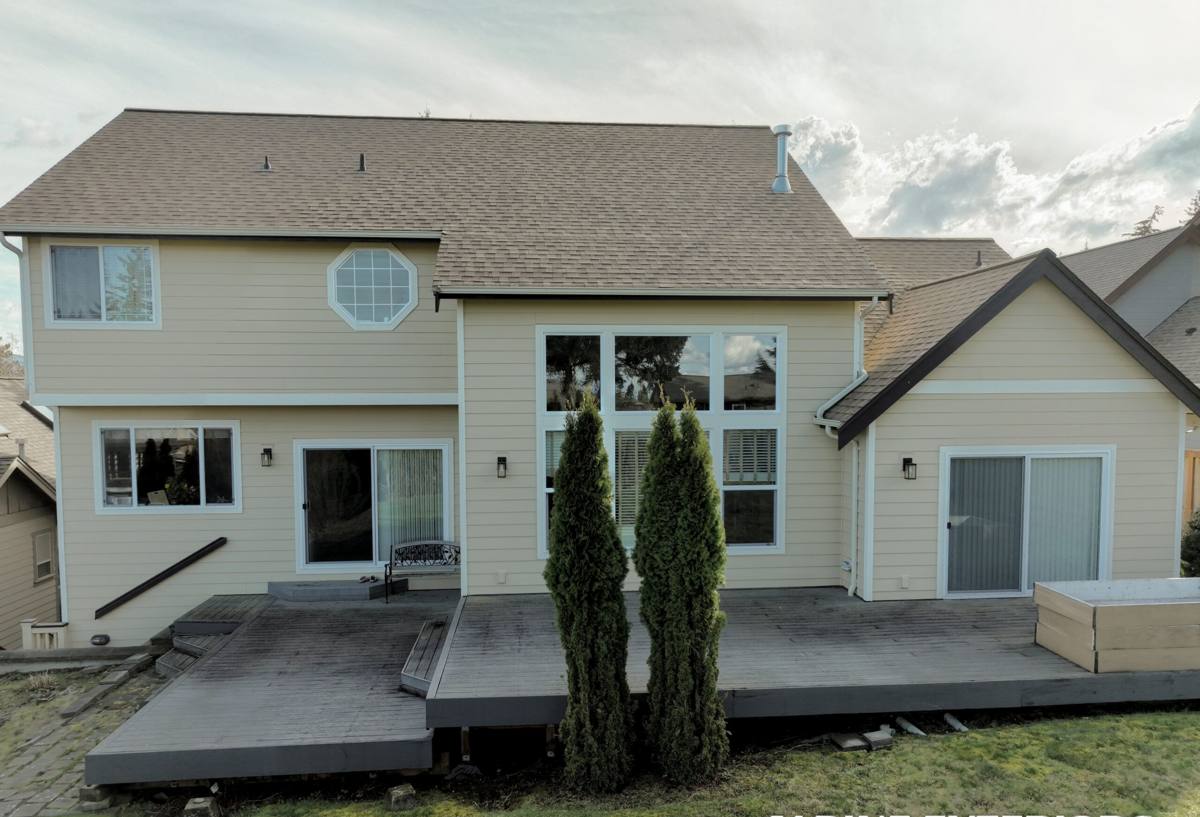
Signs a Yew Street Deck Needs Replacement, Not Just Repair
A lot of homeowners call us wanting a few boards swapped, and sometimes that's genuinely all that's needed. But in this climate, surface damage is often a symptom of something bigger going on underneath. Here's how we tell the difference on-site:
- Soft or spongy decking in multiple spots, not just one board — usually means moisture has worked past the surface and into the substrate.
- Rot at the ledger board where the deck attaches to the house — this is a structural safety issue, not a cosmetic one.
- Wobbly railings or posts — often a sign the post base or footing has moved or rotted, not just a loose bolt.
- Persistent moss or algae film that returns within weeks of cleaning — points to a deck that never fully dries between rain events.
- Visible gaps or cupping across whole sections of decking, showing the boards have absorbed and released moisture unevenly for years.
- Age — most untreated or under-flashed wood decks in this climate start showing structural issues in the 15-20 year range, sooner if the original ledger flashing was skipped or done poorly.
If what you're seeing is limited to one or two boards and the frame underneath is solid, repair is the honest answer and we'll tell you that. Replacement makes sense when the framing, ledger connection, or footings are compromised — patching over that just delays the real fix.
What a Correct Deck Replacement Actually Involves
It starts below the decking, not at it
The part of a deck that fails first in Whatcom County is almost never the decking surface — it's the framing, the ledger flashing, and the footings, because that's where water collects and has nowhere to go. A replacement that only addresses the visible boards and ignores the structure underneath will show the same rot pattern again in a few years.
What we check and correct on every replacement
- Ledger board attachment and flashing — the single most common source of hidden rot on attached decks, since this is where the deck meets the house and water intrusion is hardest to spot.
- Footing depth and condition — footings need to be sized and set correctly for the load and the soil, and shifted or undersized footings get corrected, not just built around.
- Joist spacing and hardware — proper joist hangers and corrosion-resistant fasteners matter more here than in a drier region, since standard hardware corrodes faster in persistent damp conditions.
- Proper drainage and airflow underneath the deck, so the structure can actually dry out between rain events instead of staying damp for weeks.
- Stair and railing structural connections, which take a lot of stress and are a common weak point on older decks.
Choosing the Right Decking Material for This Climate
There's no single "best" decking material — there's a best material for your budget, your maintenance appetite, and how much shade and moss exposure your specific lot gets. Here's how the common options actually perform once they're dealing with a real Pacific Northwest wet season year after year:
| Material | Moisture Behavior | Maintenance | Typical Lifespan Here |
|---|---|---|---|
| Pressure-treated wood | Absorbs and releases moisture; prone to cupping and checking if not sealed regularly | Needs re-staining/sealing every 1-3 years | 10-20 years with upkeep |
| Cedar | Naturally moisture- and rot-resistant, but still needs sealing to hold its color and resist moss | Regular cleaning and periodic sealing | 15-25 years with upkeep |
| Composite decking | Doesn't absorb water like wood, but can develop surface mold/algae film if not cleaned | Occasional washing; no staining or sealing | 25-30+ years, warranty-backed |
| PVC/capped polymer | Fully moisture-resistant surface; best resistance to moss and mildew staining | Lowest maintenance of the group | 25-30+ years, warranty-backed |
We install all of these, but we'll be straight with you: in a climate with this much sustained dampness and a long moss season, composite and capped-polymer products generally give homeowners the least ongoing hassle. Wood costs less up front and plenty of Yew Street homeowners prefer the look, but it only performs well long-term if someone actually keeps up with the sealing schedule. Our job is to lay out the honest maintenance trade-offs for your situation, not steer you toward whatever's easiest for us to install.
Our Deck Replacement Process
- On-site assessment — we inspect the decking, framing, ledger connection, footings, and posts, and tell you plainly whether you need replacement or repair.
- Written scope and estimate — a clear breakdown of what's being removed, what's being rebuilt, and material options at different price points, with no vague allowances.
- Permitting — we handle the permit application where required based on deck size, height, and attachment (see below).
- Demolition and structural assessment — once old decking is off, we can fully inspect the framing and ledger, which sometimes reveals issues that weren't visible from the surface. We'll flag anything unexpected before proceeding, not bury it in a change order later.
- Framing, flashing, and footing repair or replacement — this is the part that determines how long the new deck actually lasts.
- Decking, railing, and stair installation — installed to manufacturer spacing and fastening specs, which matters for both warranty coverage and how the deck handles seasonal wood or composite movement.
- Final walkthrough — we go over the finished deck with you and explain any maintenance specific to the material you chose.
Permits and Local Code Considerations
Deck replacement projects in unincorporated Whatcom County, which includes Sudden Valley, typically require a permit once you're replacing structural framing, not just swapping surface boards — the exact trigger depends on the deck's size, height above grade, and whether it's attached to the house. Requirements can also be affected by proximity to Lake Whatcom's watershed protections, since Sudden Valley sits within that drainage. We check current requirements for your specific property before work starts rather than assuming, because rules and setback requirements can vary lot to lot.
What Deck Replacement Costs Depend On
We don't publish a flat price because decks vary too much to make that honest, but these are the factors that actually move the number:
| Factor | Why It Matters |
|---|---|
| Deck size and shape | More square footage and more cuts around angles or stairs both add labor and material |
| Decking material chosen | Pressure-treated wood costs the least up front; composite and PVC cost more initially but less over time |
| Framing and footing condition | If the substructure needs rebuilding, not just the surface, that adds real cost but is not optional if it's compromised |
| Height and railing complexity | Elevated decks and multi-level layouts require more structural work and code compliance for railings |
| Access to the site | Tight lots or difficult equipment access can add time to demolition and material delivery |
As a rough starting point, straightforward wood deck replacements often land in the lower range of typical regional pricing, while composite or PVC replacements with structural work involved run higher — but the only way to get a real number is a site visit, because condition underneath the old decking varies so much house to house.
Why It Matters That We Already Work in Yew Street
A crew that's worked other decks in this specific neighborhood already knows the general drainage patterns, the typical exposure to weather off the lake and the wider Whatcom County marine climate, and what kinds of footing and framing issues tend to show up on homes of a certain age here. That's not a substitute for inspecting your specific deck, but it does mean fewer surprises and a more accurate first estimate — we're not guessing at how this climate treats a deck, we're seeing the same patterns repeat and building for them.
Keeping a New Deck in Good Shape
Whatever material you choose, a little seasonal attention goes a long way in this climate:
- Sweep leaves and debris off the deck surface regularly in fall, since trapped organic matter holds moisture against the boards and feeds moss growth.
- Clean the surface at least once or twice a year to prevent algae and moss film from taking hold, especially on shaded sections.
- Check and re-seal wood decking on the manufacturer's recommended schedule — don't wait until it looks dry and gray.
- Keep gutters and downspouts near the deck clear so runoff isn't dumping extra water onto or under the structure.
- Inspect railings and stair connections once a year for looseness, especially after a hard winter.
- Make sure any under-deck storage doesn't block airflow needed for the structure to dry out between rains.
If your deck in the Yew Street area is showing soft spots, moss that won't quit, or just feels less solid than it used to, we're happy to take a look and give you a straight answer on repair versus replacement. Fill out the form below for a free, no-pressure estimate.