 Sudden Valley Siding
 Deck Replacement for Alger Homes Near Sudden Valley
Alger sits close enough to the water and to Lake Whatcom's damp microclimate that decks here age differently than they would twenty miles inland. If you've watched a deck go from solid to spongy in a few short years, it's usually not bad luck — it's the combination of salt-tinged marine air, long stretches of driving rain, and a moss season that can run from October well into May. We replace decks in this area regularly, and the pattern is consistent: the framing and fasteners fail well before most homeowners expect, because the wood looks fine on the surface right up until it doesn't.
This page covers what a deck replacement actually involves for a home in the Alger and Sudden Valley area, what tends to go wrong with decks built without local conditions in mind, and how we approach the job so it holds up for decades instead of years.
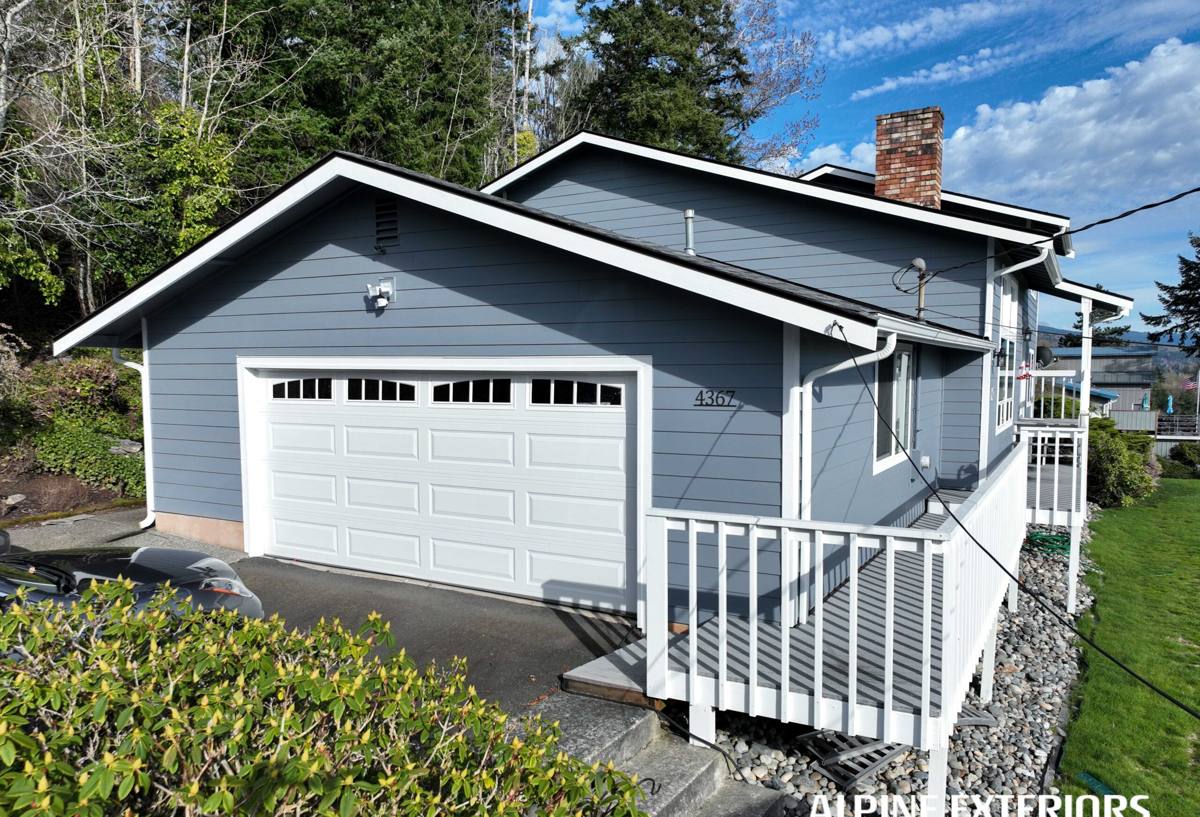
Why This Climate Is Hard on Decks
Salt Air and Metal Fasteners
Proximity to Bellingham Bay and the broader Puget Sound airshed means a fine mist of salt-laden moisture settles on exterior surfaces more often than people realize. Standard galvanized nails and screws corrode faster under that kind of exposure. Once a fastener starts rusting inside a joist or ledger board, it loses grip strength long before there's any visible sign from the top of the deck.
Driving Rain and Moisture Intrusion
Whatcom County rain doesn't just fall straight down — wind-driven rain gets pushed sideways into ledger connections, stair stringers, and any spot where two pieces of framing meet without a gap for water to escape. Decks built tight to the house without proper flashing are especially vulnerable at the ledger board, which is also the single most structurally important connection on the whole deck.
Moss, Algae, and Trapped Moisture
A long moss season means organic growth on decking boards for much of the year. Moss and algae hold moisture against the wood surface, which accelerates rot and makes boards slicker and more dangerous underfoot. On composite decking, buildup in the grain pattern can also stain the surface if it isn't cleaned before it sets in over multiple seasons.
Signs Your Alger Deck Needs Replacing, Not Just Repair
- Soft or spongy spots when you walk across the decking, especially near the house or stair landing
- Visible gaps, cracking, or splintering along more than a few boards
- Rust streaks below fastener heads or around joist hangers
- A ledger board that's separating slightly from the house rim joist, or visible daylight behind it
- Posts that wobble at the base or show soft wood at ground contact points
- A railing that flexes noticeably when leaned on
- Persistent moss or dark staining that returns within weeks of cleaning
Any one of these on its own might be a repair. Two or three together, especially involving the ledger or the posts, usually means the structure has moved past the point where patching makes sense — you'd be repairing around a framing problem instead of fixing it.
What a Correct Deck Replacement Involves
Tear-Off and Structural Assessment
We remove the old decking and railing first, then inspect the framing underneath — joists, beams, posts, and the ledger connection to the house. This is the step that gets skipped by anyone quoting a deck job sight-unseen, and it's the step that determines whether you're really getting a new deck or just new boards over old problems.
Ledger Flashing Done Right
The ledger board attachment is where most deck failures start in this climate, because it's the connection most exposed to wind-driven rain pushed against the house. A correct rebuild uses proper flashing that directs water away from the house sheathing, not just caulk over the top of the old connection.
Framing and Fasteners Matched to the Exposure
Given the salt air here, we don't cut corners on fastener grade. Structural screws and connectors rated for coastal or high-moisture exposure cost more up front but avoid the slow corrosion that undermines standard hardware over time.
Decking Material Selection
Whether you go with a treated wood, cedar, or composite deck surface, the right choice depends on how much upkeep you want to do and how much moss and moisture exposure the deck's location gets — a shaded deck under trees needs different consideration than one in open sun.
Drainage and Airflow Underneath
A deck built low to the ground or against a slope needs enough airflow underneath to let moisture escape. We check grading and clearance during the assessment phase, because a deck that traps humid air against the framing will rot from below no matter how good the surface materials are.
Decking Material Comparison for This Area
| Material | Upfront Cost | Maintenance | How It Handles This Climate |
|---|---|---|---|
| Pressure-treated wood | Lowest | Annual cleaning, periodic sealing | Good if sealed regularly; moss and moisture exposure shorten life without upkeep |
| Cedar | Mid-range | Sealing every 1-2 years | Naturally rot-resistant but still needs sealing against constant damp exposure |
| Composite | Higher | Occasional washing, no sealing | Handles moisture well; needs regular cleaning to prevent moss/algae staining in shaded spots |
| PVC decking | Highest | Minimal | Very resistant to moisture and staining; more sensitive to installation temperature and expansion gaps |
We don't push one material as universally "best." The right call depends on how much sun or shade the deck gets, how much time you want to spend maintaining it, and your budget. We'll walk through the honest trade-offs for your specific site during the estimate.
Our Process for an Alger Deck Replacement
- On-site assessment of the existing deck, framing, and ledger connection
- Honest conversation about repair versus full replacement, with reasoning explained
- Material recommendation based on your deck's sun/shade exposure and maintenance preference
- Written estimate covering demo, framing, flashing, decking, and railing
- Tear-off and disposal of the old structure
- Framing repair or rebuild, including proper ledger flashing
- Installation of new decking and railing to code
- Final walkthrough covering care and maintenance for the material you chose
We permit and build to current code requirements for railing height, baluster spacing, and structural attachment — this matters both for safety and for resale, since an unpermitted or non-code deck can become a problem when a home sells.
What to Expect in Terms of Timeline
A straightforward deck replacement on an existing footprint typically runs a handful of working days once material is on-site, weather permitting. Larger decks, added stairs, or structural repairs to posts and footings add time. Because rain is a regular factor here, we build reasonable weather buffer into scheduling rather than promising a date we can't control.
Why a Local Crew Matters for This Job
A deck built to a generic national spec sheet doesn't necessarily account for wind-driven rain off the water or a moss season that lasts most of the year. Working regularly in Sudden Valley and the surrounding Whatcom County communities means we've seen how decks actually fail here — not in a textbook, but on real homes a few miles from Alger. That shapes decisions like flashing detail, fastener grade, and where we recommend extra drainage clearance, in ways a one-size-fits-all approach wouldn't catch.
It also means we're not disappearing after the invoice clears. If a question comes up about maintenance or something settles unexpectedly in year two, you're calling a crew that's still working in your area, not chasing down a company that only passed through once.
Maintaining Your New Deck
- Sweep off standing debris and needles regularly — trapped organic matter feeds moss growth
- Rinse or gently wash the surface a couple of times a year to keep algae and moss from taking hold
- Check railing connections annually for looseness, especially after winter storms
- Reseal wood decking on the schedule appropriate to the product — don't wait until it looks gray and dry
- Keep gutters and downspouts near the deck clear so runoff isn't dumping extra water onto the structure
None of this is complicated, but skipping it is exactly how a well-built deck ends up needing early repairs in a climate like this one.
Get a Straight Answer About Your Deck
If you're not sure whether your Alger-area deck needs a full replacement or just targeted repair, we're glad to take a look and tell you honestly which one it is. We offer free, no-pressure estimates — fill out the form below and we'll get back to you to schedule a time to come out.