 Sudden Valley Siding
 Deck Repair in Edgemoor: Built for Whatcom County Weather
Decks around Edgemoor and the greater Sudden Valley area take a harder beating than most homeowners realize. It's not one dramatic storm that does the damage — it's the steady grind of salt-tinged air, driving rain that comes in sideways off the water, and a moss season that can stretch from October well into spring. Add in the shade from mature evergreens that keeps many decks damp long after the rain stops, and you've got a recipe for slow, hidden deterioration that shows up as soft boards, loose railings, and rust-streaked fasteners a few years before it should.
We repair decks in this specific area regularly, which matters more than it sounds like. A deck built the same way in a dry inland climate would hold up fine for decades. Here, the same construction detail — a ledger board without proper flashing, decking laid tight with no drainage gap, fasteners that aren't rated for coastal exposure — becomes the exact spot where the deck starts to fail. Good deck repair in this part of Whatcom County means understanding those failure points before you start pulling boards, not discovering them halfway through the job.
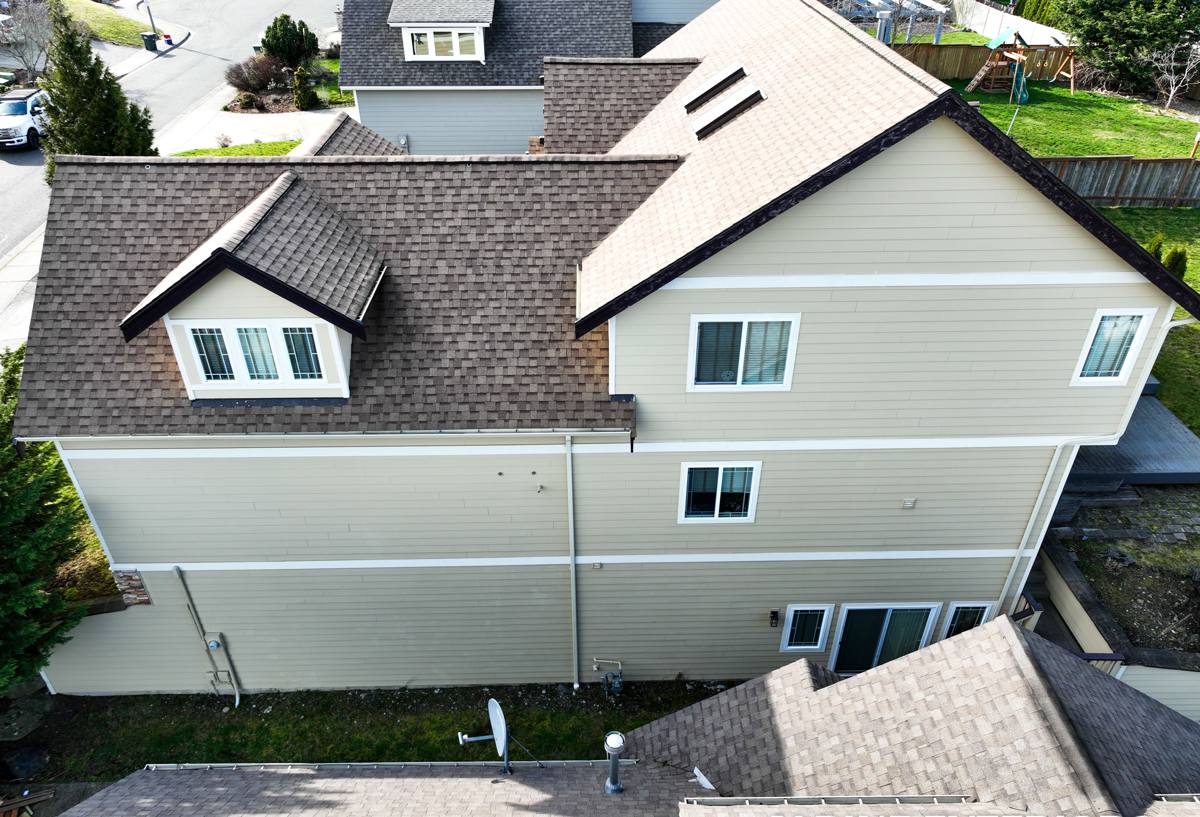
Signs Your Edgemoor Deck Needs Repair (Not Full Replacement)
Most decks don't need to be torn out and rebuilt. What they need is a contractor who can tell the difference between surface wear and structural trouble, and who fixes the actual problem instead of just swapping boards. Here's what we look for on a typical inspection:
- Boards that feel spongy or flex more than their neighbors when you walk across them
- Dark staining or a musty smell near the ledger board where the deck meets the house
- Rust streaks bleeding down from screws or nails, which usually means the fasteners are failing, not just discoloring
- Railings or posts that wiggle when pushed — a code and safety issue, not just cosmetic
- Gaps opening up between boards, or boards cupping and warping unevenly
- Green or black film building up in shaded corners and between deck boards, holding moisture against the wood
- Stair stringers or the ledger connection showing soft spots when probed with a screwdriver
Any one of these on its own is usually a repair, not a rebuild. Several of them together — especially if the ledger board or the main structural framing is involved — is worth a closer structural look before we quote anything.
Why Moss Season Is the Real Culprit
The long stretch of wet, low-sun months here does more damage to decks than any single rainstorm. Moss and algae hold water directly against the wood surface for weeks at a time, which is exactly the condition wood decay fungus needs to get established. By the time you notice green growth spreading across the boards, moisture has usually already worked its way into the wood fiber underneath. Pressure washing alone doesn't fix that — it just cleans the surface while the underlying damage keeps developing.
Repair vs. Replacement: How We Decide
We don't default to "replace the whole deck" because it's an easier sale. Most of the time, a targeted repair gets a deck back to solid and safe for a fraction of the cost of a full rebuild. The table below is a general guide — every deck gets its own honest assessment on-site.
| Condition Found | Usually Repair | Usually Replacement |
|---|---|---|
| A few soft or cupped boards, framing solid | Yes — spot-replace boards | |
| Rusted or failing fasteners, wood underneath still sound | Yes — re-fasten with correct hardware | |
| Loose railings or posts, deck surface otherwise fine | Yes — reinforce or rebuild railing system | |
| Rot at the ledger board connection to the house | Sometimes — depends on how far it's spread | Often, if framing is compromised |
| Widespread soft framing across multiple joists | Yes — safety issue, not worth patching | |
| Deck is 20+ years old with recurring rot in multiple areas | Usually — repair costs approach rebuild cost |
The honest answer is that repair makes sense when the problem is localized and the main structure — the ledger, the beams, the posts and footings — is still sound. Replacement makes sense when the damage has spread into the framing itself, because at that point you're paying repair labor rates to patch something that's going to need attention again in a year or two anyway.
What a Correct Deck Repair Actually Involves
A rushed repair swaps out the board you can see and calls it done. A correct one starts by figuring out why that board failed in the first place, so the same problem doesn't reappear next season.
Ledger Board and Structural Connection
The ledger — where the deck attaches to the house — is the single most common point of hidden rot, and it's also the most serious to get wrong, since it's part of what holds the deck up. If there's no proper flashing directing water away from that joint, moisture gets trapped between the deck and the siding every time it rains. We check this connection on every repair, not just when it's the obvious complaint, because in this climate it's often failing quietly before anything visible shows up on the surface.
Framing and Joists
Joists that have gone soft need to be sistered (reinforced with a new piece of lumber alongside the damaged one) or replaced outright — never just covered over with new decking on top. Covering rot doesn't stop it; it just hides it under fresh boards for a year or two.
Fasteners and Hardware
This is where a lot of older decks in this area run into trouble. Standard fasteners corrode fast in coastal, damp conditions, and once a nail or screw starts rusting, it loses grip and lets water into the hole it's sitting in — which accelerates rot right at that spot. We use fasteners and connector hardware rated for exterior, corrosive-exposure use, matched to whatever decking material is going back on.
Decking Boards
Individual board replacement only works well when the new boards are properly gapped for drainage and expansion. Boards installed tight together trap water and debris between them, which is exactly what accelerates the next round of rot. We match spacing to the existing deck where it's already correct, and fix it where it isn't.
Railings and Stairs
Loose railings are a safety problem before they're a cosmetic one. We check post attachment down to the framing, not just whether the railing itself feels tight, since a railing can look fine and still be anchored into wood that's failing underneath.
Materials: What We Use and Why
Pressure-treated lumber, cedar, and composite decking all show up on decks in this area, and each has real trade-offs worth understanding before a repair — especially if you're mixing new material into an older deck.
- Pressure-treated lumber is the most common and most affordable option for structural framing and board replacement. It handles moisture well when properly sealed and maintained, but it does need re-staining or sealing every couple of years in this climate to keep performing.
- Cedar has natural rot resistance and a look a lot of homeowners prefer, but it's more expensive and softer, so it dents and wears faster underfoot, and it still needs regular sealing here.
- Composite decking resists moisture and moss staining better than wood over the long run, which makes it attractive for a heavily shaded, damp lot. The trade-off is upfront cost and the fact that damaged composite boards typically need full replacement rather than sanding or spot repair.
For repairs specifically, we generally match the existing material unless there's a good reason not to — mixing composite into a wood-framed deck can work, but it changes how the whole structure handles moisture, and that's worth discussing before, not after, the work starts.
Our Repair Process
Every job starts with an actual inspection, not a guess from the driveway. Here's the general sequence:
- Walk the full deck surface, probing suspect boards and checking railings, stairs, and posts for movement
- Inspect the ledger board connection and visible framing from underneath where accessible
- Check fastener condition and drainage — are boards gapped correctly, is water pooling anywhere
- Identify moss, algae, or staining patterns that point to chronic wet spots
- Give you a clear, itemized picture of what's cosmetic, what's structural, and what can wait
- Repair or replace only what needs it, using hardware and materials rated for this climate
- Final check of railings, stairs, and fastener tightness before we call it done
We'd rather walk you through what we found and let you decide than push a bigger job than the deck actually needs.
Why a Crew That Already Works Edgemoor and Sudden Valley Matters
Deck repair isn't a generic trade you can do the same way everywhere. A crew that regularly works this specific area already knows which failure points to check first — the ledger flashing, the shaded corners where moss builds up fastest, the fastener corrosion that shows up here years before it would inland. That local familiarity means a faster, more accurate inspection and fewer surprises once we start pulling boards.
It also means we're realistic about timing. Whatcom County's wet season isn't the ideal window for deck work, and we plan repair scheduling around drier stretches when possible so materials aren't going down wet and hardware isn't being installed in the rain. That's a small thing that makes a real difference in how long a repair actually lasts.
Maintenance That Extends a Repair's Life
A repair is only as good as the upkeep after it. A few habits make a real difference in this climate:
- Sweep or blow off leaves and needles regularly, especially in shaded corners where moss gets a foothold fastest
- Rinse off moss and algae buildup before it spreads, rather than waiting for an annual deep clean
- Re-seal or re-stain wood decking on the schedule appropriate to the product — don't stretch it out just because the boards still look fine on top
- Check railings and stair connections for looseness once or twice a year
- Keep gutters and downspouts near the deck clear so runoff isn't draining directly onto or under it
Get an Honest Look at Your Deck
If your deck has a few soft spots, loose railings, or that persistent green tinge that won't stay clean, it's worth getting a straight answer on what's actually going on before it turns into a bigger job. We offer free, no-pressure estimates for deck repair in Edgemoor and the surrounding Sudden Valley area — fill out the form below and we'll take a look.