 Sudden Valley Siding
 Deming's Wet, Shaded Climate Is Hard on Decks
Deming sits in the Nooksack River valley, tucked under second-growth timber and the kind of year-round dampness that defines this part of Whatcom County. Homes here — and nearby in Sudden Valley — deal with a climate that's different from a typical suburban lot: heavy tree cover holds moisture on deck boards long after a storm passes, driving rain off the foothills finds its way under flashing and into ledger boards, and a moss season that can run from October through May coats every horizontal surface in a slick, water-holding layer. Closer to the coast, that dampness carries a trace of salt air off Bellingham Bay; out here it's less about salt and more about shade, humidity, and standing water that never fully dries between rains. Either way, wood and fasteners take a beating.
A deck built to a generic spec — standard pressure-treated lumber, minimal flashing, deck screws driven straight into end grain — will show its age faster in Deming than it would in a drier climate. That's not a knock on the original builder; it's just what this valley does to exterior wood structures over ten or fifteen years.
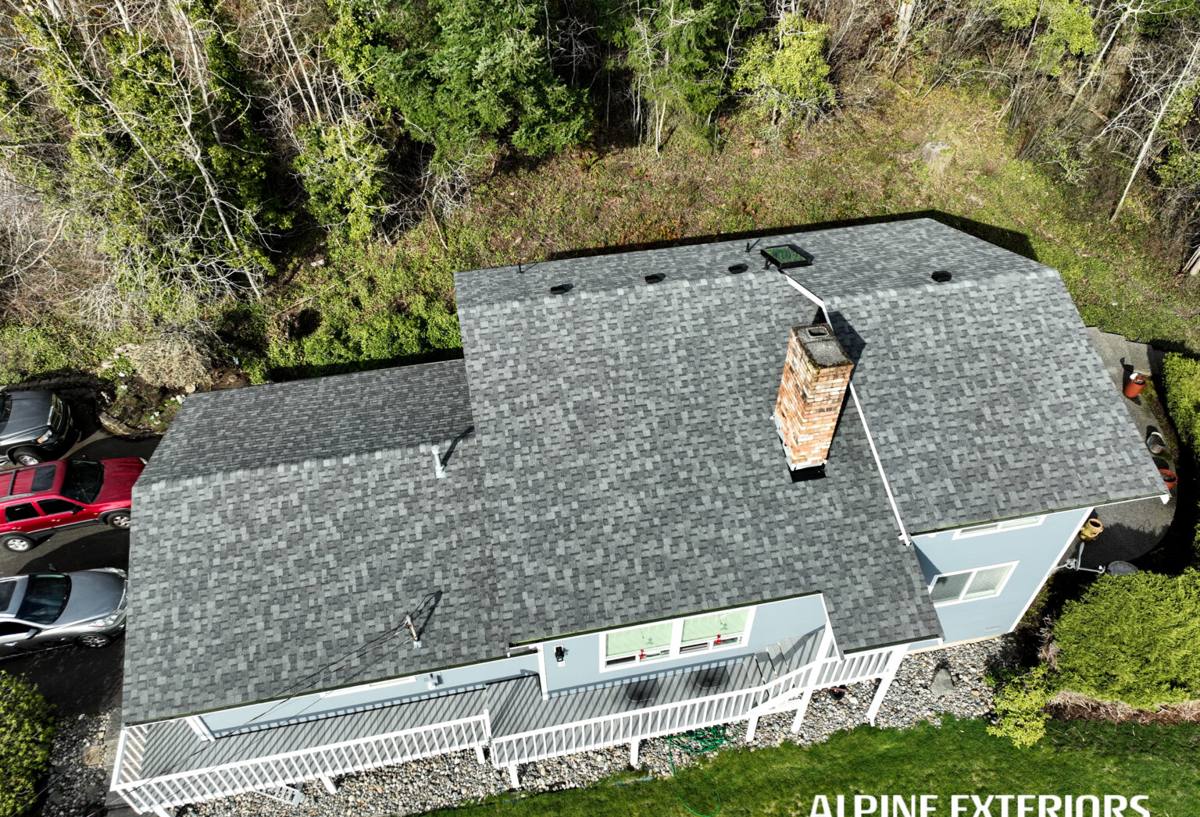
Signs Your Deck Needs Repair Now, Not Next Summer
Most deck problems start small and stay hidden until they're not. A few minutes with a flathead screwdriver and a flashlight under the deck will tell you more than a glance from the yard. Look for:
- Soft, spongy, or dark-stained decking boards, especially near board ends and around fasteners
- A screwdriver that sinks into a joist or ledger board without much resistance — a sign of rot, not just surface weathering
- Rust streaks running down from screw or nail heads
- Gaps or movement where the ledger board attaches to the house, or daylight visible behind flashing
- Wobbly, spongy, or cracked railing posts — often the first structural failure people notice because it's the part they touch
- Green or black growth (moss, algae, mildew) that stays damp for days instead of drying between rains
- Stair stringers that flex or feel uneven underfoot
Any one of these on its own might just mean a small repair. Several at once, especially around the ledger or main support posts, usually means it's time for a proper structural inspection before anyone puts weight on the deck.
What a Correct Deck Repair Actually Involves
Framing and Structure Come First
The part of a deck nobody sees — the ledger board, joists, beams, and posts — is the part that actually holds people up. A repair that only replaces the boards you can see, without checking what's underneath, is a cosmetic fix on a structural problem. We pull decking in the affected area, probe the framing with an awl, and replace or sister any joist, beam, or ledger connection that's soft, cracked, or corroded. Ledger board attachment gets particular attention here, since that's the connection between the deck and the house, and it's the one most often installed without adequate flashing or fasteners on older decks.
Decking, Rails, and the Visible Layer
Once the structure is sound, we address what's visible: replacing rotted or split boards, resetting fasteners that have backed out or rusted, and rebuilding rail sections that have gone soft or loose. We also look at how water is meant to move off the deck — gaps between boards, slope away from the house, and whether flashing is doing its job at the ledger — because a repair that ignores drainage just buys you a few more years before the same spot fails again.
Repair or Full Replacement? What Actually Drives the Decision
Not every deck problem calls for a teardown, and not every deck is worth patching board by board. The honest answer usually comes down to how much of the structure is still sound versus how much has already failed.
| Factor | Leans Toward Repair | Leans Toward Replacement |
|---|---|---|
| Framing condition | Joists and ledger are solid; damage is isolated | Rot has spread through multiple structural members |
| Age of the deck | Under 15-20 years, built to a reasonable original spec | Original construction is undersized or outdated for current code |
| Extent of damage | Limited to a few boards, one rail section, or a corner | Damage is spread across the whole surface or frame |
| Ledger connection | Properly flashed and attached, no active water intrusion | Poor original flashing with ongoing moisture behind the house wall |
| Long-term plans | You want to extend the deck's life a reasonable amount | You're changing the deck's size, shape, or material anyway |
When we walk a deck for an estimate, we'll tell you honestly which side of that line it falls on — including when repair is the right call even though replacement would be more profitable for us. A deck that just needs a ledger rebuild and a dozen boards doesn't need to come down.
How We Approach a Deck Repair
- Full inspection. We check framing, ledger attachment, fasteners, and drainage before quoting anything — not just the boards that look bad from the yard.
- A clear, written scope. You get a plan that separates structural repairs from cosmetic ones, so you know what you're paying for and why.
- Structural work first. Any compromised joist, beam, post, or ledger connection gets addressed before a single new board goes down.
- Rebuild the visible layer. Decking, rails, stair components, and fasteners are replaced to match or improve on the original.
- Check drainage and flashing. We confirm water has somewhere to go, especially at the ledger, so the repair holds up through the next wet season.
- Clean up and walk-through. We haul away old material and walk the deck with you before we call the job done.
Material Choices: Being Straight About the Trade-Offs
For framing repairs, pressure-treated lumber remains the standard — it's rated for weather exposure, it's readily available, and it's the material most existing decks are already built from, which makes matching and sistering straightforward. For decking and rail caps, homeowners in Deming and Sudden Valley generally choose between treated wood and composite boards, and both are reasonable choices with different maintenance realities.
Treated wood costs less up front and is simple to repair board by board down the road, but it needs periodic sealing or staining to keep performing well in this climate — skip that maintenance for a few years on a moss-prone, shaded lot and it will show. Composite decking costs more initially and doesn't need sealing, but it's less forgiving of poor substructure ventilation and, on lower-tier product lines, can be more prone to surface staining from standing organic debris — leaves, needles, moss — if it isn't cleaned off regularly. Neither material is a bad choice; the right one depends on how much upkeep you want to do and how the deck gets used. We'll walk through both honestly rather than pushing whichever is easier for us to install.
Why It Matters That We Already Work in Deming and Sudden Valley
A lot of exterior contractors will drive out from Bellingham for a bid and never come back for the follow-up. Working this stretch of Whatcom County regularly — from the lakefront lots around Sudden Valley to the more rural, timber-shaded properties around Deming — means we already know what a deck out here is up against: the long moss season, the way rain runs off a shaded roofline onto a ledger board, the access challenges on sloped or wooded lots, and how weather windows work for outdoor work between fall and spring. That's the difference between a repair that's built for this valley and one that's built for a generic spec sheet.
It also means we're not guessing about scheduling around the wettest stretches of the year, or figuring out access to a rural property for the first time on your job. If your deck needs follow-up attention in a year or five, we're still the same crew down the road — not a name from an out-of-area lead-generation site.
Keeping a Repaired Deck From Needing Repair Again
A repair is only worth the cost if it lasts. A few habits go a long way in this climate:
- Sweep leaves, needles, and moss off the deck surface regularly, especially in fall and winter — trapped organic debris holds moisture against boards
- Reseal or restain treated wood decking on a regular schedule rather than waiting until it already looks dry and gray
- Keep gutters and downspouts clear so roof runoff isn't dumping extra water directly onto or under the deck
- Check the ledger board area and any flashing once a year for gaps, cracks, or trapped moisture
- Address soft spots or loose rails as soon as you notice them — a small repair now is cheaper than a structural one later
If you're not sure whether your deck needs a few boards replaced or a closer look at the framing underneath, we're glad to come take a look. We offer free, no-pressure estimates for deck repair in Deming, Sudden Valley, and the surrounding areas — just fill out the form below and we'll get in touch.