 Sudden Valley Siding
 Building Decks for Columbia's Climate, Not Against It
Homes in the Columbia area near Sudden Valley sit in one of the more demanding microclimates in Whatcom County for outdoor structures. Between salt-laden air moving in off the water, driving rain that comes in sideways during winter storms, and a moss season that can stretch from late fall through spring, a deck here works a lot harder than the same structure would in a drier inland town. A deck built to a generic national spec, without any thought to this specific mix of conditions, tends to show its age fast — soft spots in the decking, corroded fasteners, slick moss buildup, and ledger connections that were never properly flashed.
We build decks specifically for this environment. That means material choices, fastener grades, drainage detailing, and maintenance planning that all account for what a Columbia deck actually has to survive year after year, not just what looks good on install day.
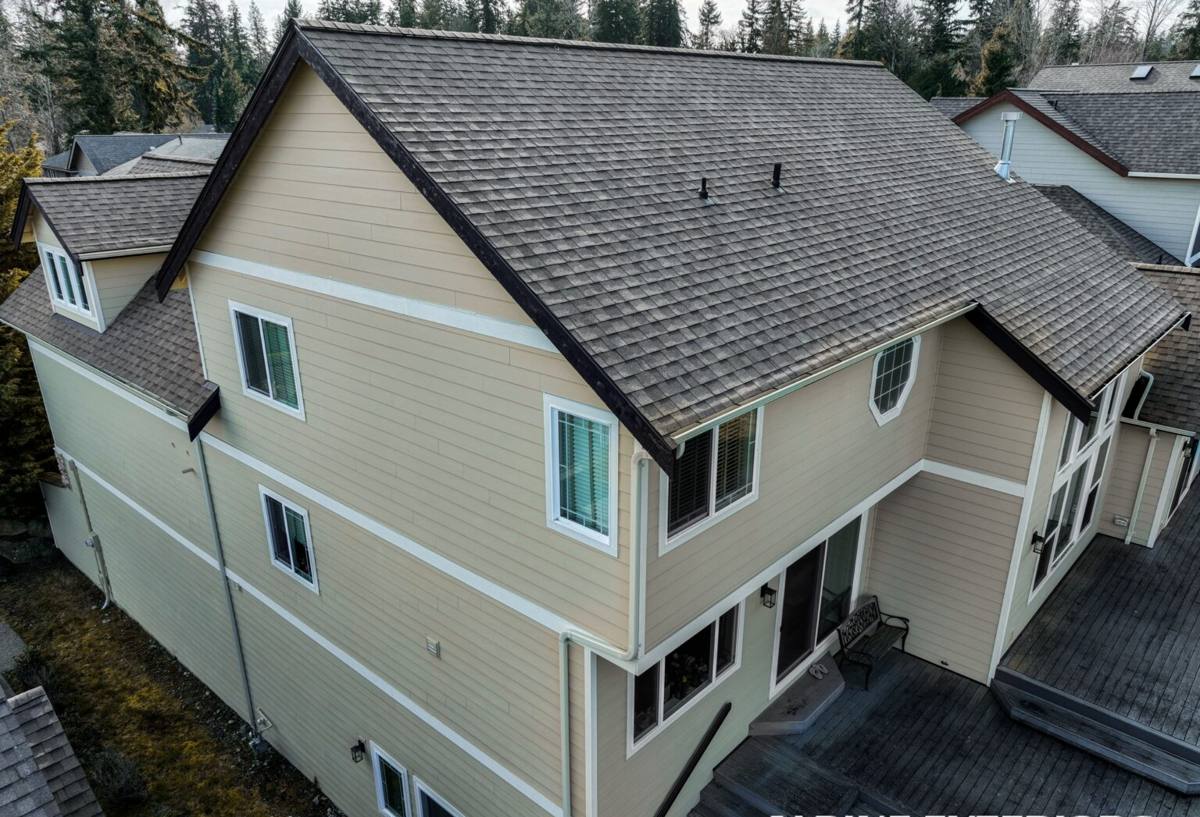
What This Climate Does to an Improperly Built Deck
It helps to understand the specific failure points before talking about the fix. In this part of Whatcom County, the deck problems we get called out to inspect and repair almost always trace back to a handful of causes:
- Moisture trapped at the ledger board — where the deck attaches to the house is the single most common source of hidden rot, because water gets behind the band board if flashing wasn't installed correctly at the start.
- Fastener corrosion — standard zinc-coated screws and nails degrade faster near salt air and constant moisture, leading to staining, weakening, and eventual failure at load-bearing points.
- Moss and algae buildup on decking — a long damp season means moss gets a real foothold on any surface that doesn't drain and dry quickly, and moss holds moisture against the board surface, accelerating wear underneath it.
- Standing water on horizontal surfaces — flat spots or reverse-pitched framing hold water instead of shedding it, which is one of the fastest ways to shorten the life of any decking material.
- Undersized or poorly protected footings — freeze-thaw cycles and saturated soil move footings that weren't set to the right depth or protected properly, which shows up later as a deck that's noticeably out of level.
None of these are exotic problems. They're predictable, and they're preventable with the right build details from the start.
What a Correctly Built Deck Involves Here
Ledger Attachment and Flashing
The ledger board — the piece that ties the deck to the house — is where we spend the most care on any project in this area. That means proper through-bolting or approved structural fasteners rather than relying on nails alone, and a correctly layered flashing system that directs water away from the house sheathing rather than letting it wick in behind the ledger. Skipping or shortcutting this step is the single most common cause of expensive structural rot we see in older decks in the area.
Fastener and Hardware Grade
Given the salt air exposure, we use corrosion-resistant fasteners and structural hardware rated for coastal or wet-climate use — not the minimum-spec hardware that's fine in a dry inland build but starts rusting and staining within a few seasons here. This applies to joist hangers, structural screws, and any exposed metal connectors, not just visible surface screws.
Framing and Drainage
Joists and beams are sized and spaced to the actual load and span requirements for the deck, not just "what's typically done." Just as important is making sure the frame is built with a slight pitch away from the house so water sheds instead of pooling, and that joist tops are protected so they don't sit in standing moisture over time.
Footings Set for Local Soil and Frost Conditions
Footings are dug and set to the depth and bearing appropriate for the site's soil conditions, not a shortcut minimum. A deck that shifts or settles unevenly within a few years almost always traces back to footings that were undersized or set too shallow for the ground they're in.
Decking Material Choices for This Environment
Material choice matters more here than in a drier climate, because whatever you pick will spend a good part of the year damp, shaded, and exposed to moss spores. Here's how the common options actually perform under Columbia's conditions:
| Material | How It Handles Moisture & Moss | Maintenance Burden | Typical Lifespan Here |
|---|---|---|---|
| Pressure-treated wood | Sheds water reasonably well when sealed; grain can trap moisture and moss if left unsealed | Needs re-sealing/staining every 1–3 years | 15–20 years with upkeep |
| Cedar | Naturally moisture-resistant, but surface still needs treatment to resist moss in shaded, damp spots | Regular cleaning and periodic sealing | 15–25 years with upkeep |
| Composite decking | Doesn't absorb water into the board itself, but surface texture can still hold moss/algae if not cleaned | Low — periodic washing, no sealing/staining | 25–30+ years, manufacturer-dependent |
| Capped PVC decking | Fully sealed surface resists moisture absorption and is the easiest to keep moss-free | Lowest — occasional rinse/wash | 25–30+ years, manufacturer-dependent |
There's no single "right" answer for every homeowner — budget, look, and how much upkeep you want to do all factor in. What we won't do is install a product in a shaded, damp, low-airflow spot without being upfront about the maintenance it'll actually require to stay safe and good-looking. That's a conversation we have honestly at the estimate stage, not something that gets glossed over to close a sale.
Our Process, Start to Finish
- Site walk and assessment — we look at sun/shade exposure, drainage patterns, soil conditions, and how the deck will tie into the house before recommending anything.
- Design and material discussion — we talk through decking material, railing style, and layout against your budget, being direct about trade-offs for each option in this climate.
- Permitting — decks above a certain height or attached to the structure typically require a permit in Whatcom County; we handle that process so it's not left to you to figure out.
- Footings and framing — footings are set and cured properly before framing begins; we don't rush this step to hit a shorter timeline.
- Ledger flashing and structural connections — the details described above are built in from day one, not added as an afterthought.
- Decking, railing, and finish work — installed to the manufacturer's spacing and fastening specs for proper drainage and expansion.
- Final walkthrough — we go over the finished deck with you, including what maintenance it needs and how often, so there are no surprises down the road.
Permits and Code Considerations Near Sudden Valley
Most attached decks and any deck built above a modest height off the ground require a building permit in Whatcom County, along with inspections at key stages like footings and framing. We pull the necessary permits and coordinate inspections as part of the job rather than leaving that on the homeowner's plate. This isn't just a box-checking exercise — the inspection points exist specifically to catch the ledger, footing, and framing issues that cause the most common deck failures in this region.
Maintenance That Actually Matters in This Climate
A well-built deck still needs some seasonal attention here, especially given the moss season. A simple, realistic maintenance routine goes a long way toward protecting the investment:
- Sweep debris and standing leaves off the deck surface regularly, especially in fall — trapped organic matter is what feeds moss growth.
- Rinse or wash the deck surface periodically to interrupt moss and algae before it gets established, particularly in shaded corners.
- Check the ledger board area and any visible flashing once a year for staining or gaps that could indicate water intrusion.
- Inspect railings, stairs, and structural connections annually for looseness or corrosion at fastener points.
- Re-seal or re-stain wood decking on the schedule appropriate to the product — don't wait until it's visibly graying or absorbing water.
- Keep gutters and downspouts near the deck clear so roof runoff isn't dumping extra water onto or under the structure.
Cost Factors to Expect
Every deck project is different, but the main cost drivers in this area are generally consistent: size and footprint, decking material selected, height off grade (which affects footing and railing requirements), site accessibility, and any structural work needed at the ledger connection. A straightforward pressure-treated deck will typically cost less upfront than composite or capped PVC, but that has to be weighed against the maintenance time and long-term durability differences outlined above. We provide a clear, itemized estimate before any work starts so there's no ambiguity about what's included.
Why a Crew That Already Works Columbia Matters
Building decks correctly in this specific pocket of Whatcom County isn't guesswork — it's knowing which failure points show up repeatedly in this climate and building around them by default, not as an upsell. A crew that regularly works the Sudden Valley and Columbia area already knows the soil behavior, the typical drainage patterns on local lots, and the permitting process with the county. That local familiarity translates directly into fewer surprises during the build and a deck that's actually set up to handle the salt air, driving rain, and moss season it's going to face for the next two-plus decades.
If you're planning a new deck or replacing one that's showing its age, we're happy to come take a look and give you a straightforward, no-pressure estimate — just fill out the form below.