 Sudden Valley Siding
 Decks Built for South Hill's Weather, Not Against It
South Hill sits close enough to the water and high enough on the terrain that its decks take a different kind of beating than decks in drier parts of Whatcom County. Homes here deal with salt-laden air off the lake and sound, long stretches of driving rain most of the fall and winter, and a moss season that can run six months or more if a deck doesn't get enough sun and airflow. A deck built without those three things in mind will look fine for a year or two and then start telling on itself — soft spots underfoot, black streaking between boards, fasteners bleeding rust through the finish.
We build and replace decks specifically with South Hill's exposure in mind: the right structural spacing for drainage, hardware rated for salt-air corrosion, and a surface material and finish schedule that actually holds up to moss pressure instead of just resisting it for a season.
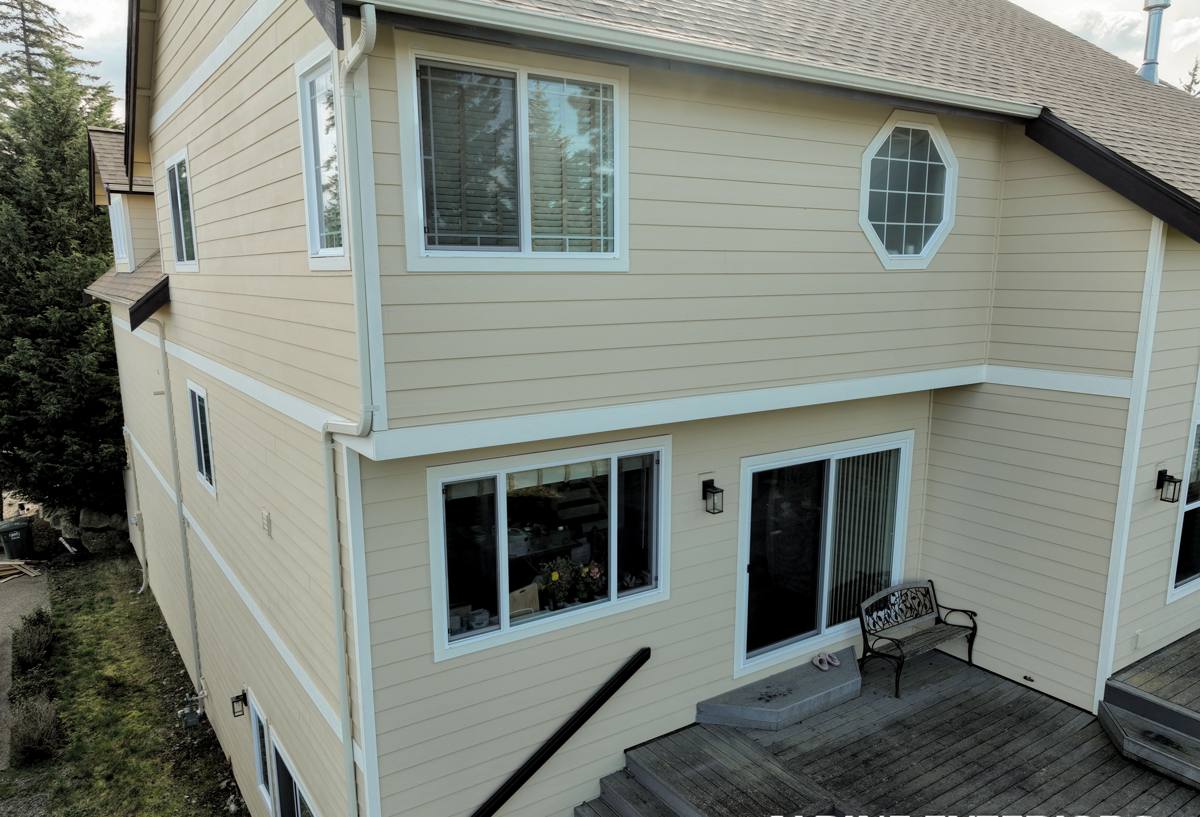
What South Hill's Climate Actually Does to a Deck
Salt Air and Metal Fatigue
Properties nearer the water get a steady, low-grade dose of salt in the air. It doesn't show up as visible corrosion overnight — it shows up two or three years in, as rust bleeding through screw heads, joist hangers pitting from the inside, and galvanized coatings failing early. Standard exterior-grade hardware isn't always enough out here; we spec stainless or heavy-duty coated fasteners and connectors on decks in the more exposed pockets of South Hill.
Driving Rain and Water Management
Rain in this part of Whatcom County doesn't fall straight down much of the year — wind pushes it sideways into ledger connections, stair stringers, and any spot where two deck components meet. If those joints aren't flashed and gapped correctly, water gets trapped instead of shedding, and that's where rot starts from the inside out, often before it's visible from the top.
Moss Season
Shaded, north-facing, or tree-covered sections of a South Hill lot can stay damp for months at a time. Moss and algae need exactly that — steady moisture and low sun — and once established, they hold water against the deck surface and make boards slick and slippery underfoot. A deck built with tight board spacing or no airflow underneath will grow moss faster than a neighbor's deck with the same materials, just because of drainage and sun exposure.
What a Correctly Built Deck Involves Here
A deck that's going to last in South Hill's conditions isn't just about picking a nice-looking board. The details that don't show up in a photo are usually what determine whether it's still solid in ten years.
- Ledger board flashed and sealed against the house wall so wind-driven rain can't work its way behind the connection
- Joist and beam hardware rated for coastal/high-moisture exposure, not just standard galvanized
- Board spacing set for drainage and airflow, not just tight for looks — this is what slows moss and algae growth
- Footings sized and set to local frost and drainage conditions, not guessed at
- Stair and railing connections built to current code, with attention to grip and slip resistance given how often the surface gets wet
- A finish or coating schedule matched to the decking material, applied correctly the first time so it doesn't fail early and require a full strip-and-redo
Choosing a Decking Material for This Climate
There's no single "best" decking material — there's a best material for a given budget, sun exposure, and maintenance appetite. We walk every South Hill homeowner through the honest trade-offs rather than pushing one option.
| Material | How It Handles Our Climate | Maintenance | General Cost Position |
|---|---|---|---|
| Pressure-treated wood | Solid performer if sealed and re-coated on schedule; needs airflow underneath to resist moss | Annual cleaning, re-sealing every 2-3 years | Lowest upfront cost |
| Cedar | Naturally moisture-resistant, but still needs finish maintenance in a wet, salt-air climate | Regular cleaning and re-oiling to keep color and resist graying | Mid-range |
| Composite decking | Very good moss and moisture resistance; some early-generation composites had issues with algae staining in shaded, damp spots — modern capped composites handle it much better | Low — periodic washing, no sealing or staining | Higher upfront, lower long-term labor |
| PVC decking | Excellent moisture and rot resistance; performs well in shaded, damp South Hill lots | Lowest — occasional washing | Highest upfront cost |
For lots that stay shaded or damp much of the year — common on tree-covered South Hill parcels — we lean toward recommending composite or PVC, simply because the maintenance burden of a wood deck in that kind of exposure adds up fast. For sunnier, more open lots, a well-sealed wood deck can perform well and cost less to build.
Why We're Selective About Certain Products
Not every decking product on the market gets our recommendation for this area. Some economy composite boards, for instance, don't have a full cap on all sides, which means the exposed core can absorb moisture at cut ends — a real problem when a deck sees this much rain. That's not a claim that any specific brand is bad; it's a maintenance and moisture-behavior trade-off we flag honestly so a homeowner isn't surprised five years in. We'll tell you plainly when a product isn't a good match for a shaded, wet South Hill site, even if it's cheaper upfront.
Repair, Rebuild, or Replace?
Not every deck needs a full teardown. We look at three things before recommending a path: the condition of the structural framing (joists, beams, posts, footings), the condition of the surface boards, and how the deck is attached to the house.
- Repair makes sense when the frame is sound and only isolated boards or railing sections have failed.
- Resurface (new decking over an inspected, sound frame) can save cost when the substructure has years of life left but the surface is worn, cupped, or moss-stained beyond cleaning.
- Full replacement is the right call when framing shows rot, hardware is corroded, or the ledger connection has been letting water in — patching a deck with a compromised frame just delays a bigger problem.
We're straightforward about which category a given deck falls into. If a repair will genuinely hold up, we'll say so — a full rebuild isn't always the right recommendation just because it's more work.
Our Process for South Hill Deck Projects
1. On-Site Assessment
We walk the existing deck (or the build site for a new one) and check framing, ledger condition, drainage, sun exposure, and how the site handles wind-driven rain. For replacements, this tells us honestly whether repair, resurface, or rebuild makes sense.
2. Material and Design Discussion
We go over decking material options against your budget, how much sun and shade the deck actually gets, and how much maintenance you want to take on long-term. No pressure toward the most expensive option — just the trade-offs laid out plainly.
3. Permitting and Code Compliance
Deck work in Whatcom County typically requires permitting, especially for elevated structures, railings, and stairs. We handle that process so the finished deck is inspected and code-compliant, which also matters if you sell the home later.
4. Build
Framing first, with attention to hardware selection and flashing at every connection point. Decking, railing, and stairs go on last, with fastening and gap spacing set for this climate's drainage and moss needs.
5. Walkthrough
We go over the finished deck with you — drainage, railing, finish or care instructions if applicable — so you know what maintenance (if any) it needs going forward.
Why a Crew That Already Works South Hill Matters
A deck built by a crew that hasn't worked this specific pocket of Whatcom County can still be built to code and still fail early here — because code minimums don't account for salt air corrosion rates or which lots sit in a moss-heavy microclimate. We already know which South Hill areas need upgraded hardware, which lots need extra drainage attention under the deck, and which framing details actually hold up through a full wet season here rather than just on paper. That local pattern recognition is the difference between a deck that needs attention again in three years and one that doesn't.
A Few Practical Things to Check on Your Own Deck
- Press on boards near the house connection and stair landings — sponginess signals hidden rot
- Look underneath for daylight and airflow — tight, boxed-in undersides trap moisture and speed up moss growth
- Check fastener heads for rust streaking, especially on decks closer to the water
- Look for black or green staining that doesn't wash off with a simple cleaning — that's established moss/algae, not just surface dirt
- Check railing posts for movement — a loose post is a safety issue, not just cosmetic
If you're seeing any of these on a South Hill deck, it's worth getting eyes on it before another wet season goes by. If you're planning a new deck, getting the drainage and hardware decisions right from the start costs far less than fixing them later.
We offer free, no-pressure estimates for South Hill deck projects, whether that's a repair, a resurface, or a full custom build. Fill out the form below and we'll take a look.