 Sudden Valley Siding
 What Cordata's Weather Actually Does to Siding
Homes in the Cordata area sit inside a stretch of Whatcom County that gets hit from two directions at once: moisture coming off the water and moisture coming down out of the sky for months at a stretch. That combination is harder on exterior siding than either factor alone. Salt-tinged air accelerates corrosion on fasteners and trim metal, driving rain finds every gap in a lap joint or a poorly caulked seam, and the long stretches of overcast, damp weather each fall and winter feed moss and algae growth on anything that stays wet longer than it should.
None of that is exotic. It's just persistent. A siding product or installation detail that would hold up fine in a drier inland climate can start showing problems here in a fraction of the time — swelling at butt joints, paint failure at end cuts, soft spots where water has been sitting against the wall assembly instead of running off it. The siding on a Cordata home isn't just decorative. It's the first and most important line of defense against a climate that rarely gives a wall assembly a chance to fully dry out between weather events.
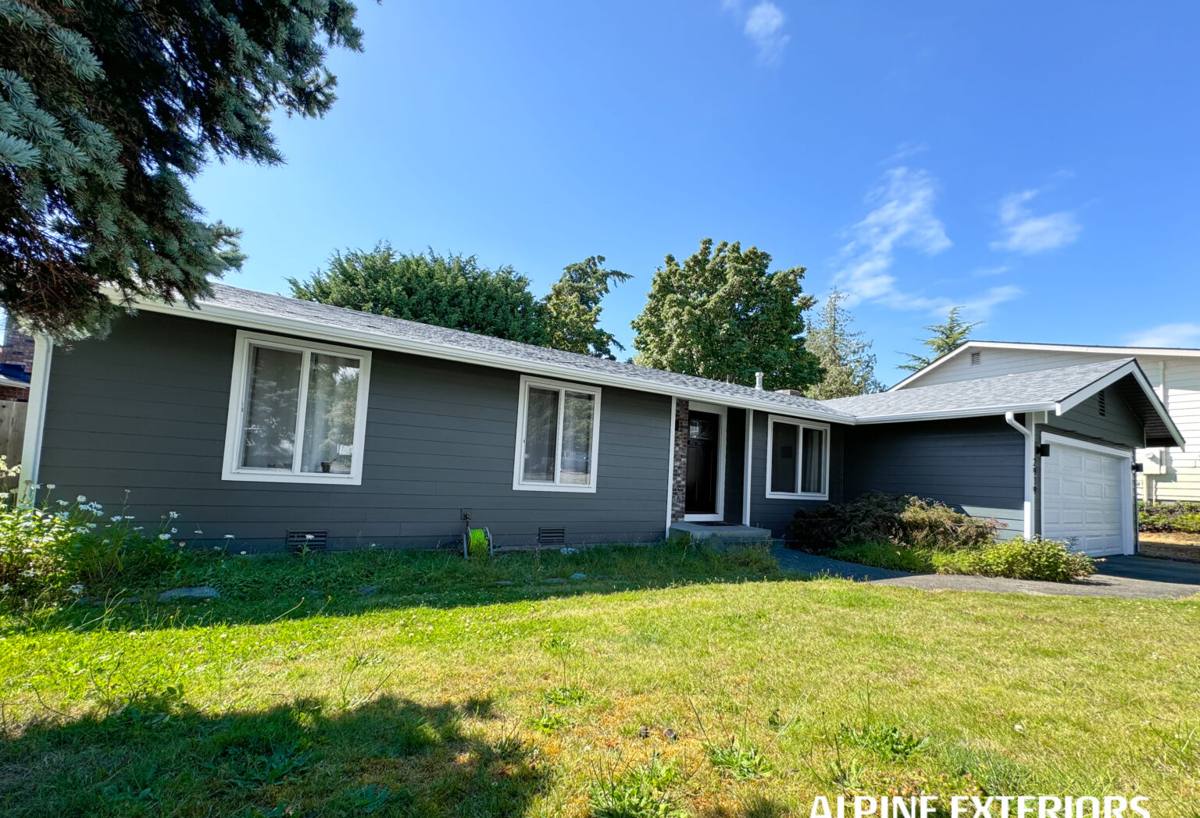
Why We Only Install James Hardie Here
We've made James Hardie fiber cement the only siding product we install, and the reasoning is straightforward for a climate like this one. Fiber cement doesn't absorb and swell the way wood-based products can, it doesn't trap moisture behind it the way some vinyl installations do when flashing details are cut short, and it holds paint and factory finish far longer than primed wood products that need repainting on a recurring cycle.
Hardie's ColorPlus factory finish is baked on and warrantied against fading and peeling, which matters in a spot where a homeowner doesn't want to be back up on a ladder repainting trim every few years just to keep moss and mildew from taking hold in worn paint. Hardie also builds its plank and panel products in climate-specific formulations — the HZ5 line is engineered for the wetter, more temperate coastal and Pacific Northwest climate zone, which is the right specification for this area rather than a hotter, drier zone formulation.
We're upfront that this means we don't install vinyl siding, LP SmartSide, cedar, primed spruce, or other fiber cement brands like Cemplank or Allura. Each of those has a legitimate place in the market, and some are genuinely good products when installed correctly. But we standardized our crew, our tools, and our installation training on one product system so we can guarantee the details — flashing, fastening, clearances — are done the same correct way every time, rather than switching methods from job to job.
What "Correct Installation" Actually Means
The material is only half the equation. Most siding failures we get called out to inspect trace back to installation shortcuts, not the product itself. On a Hardie job done right, that means:
- Proper starter strip and clearance at the foundation line so water sheds away from the wall instead of wicking up into the bottom course
- Correct fastener type, spacing, and depth — over-driven or under-driven nails are one of the most common causes of premature plank failure
- Rain screen or drainage plane behind the siding where the wall assembly calls for it, so any moisture that does get behind the cladding has somewhere to go
- Flashing and kick-out details at every roof-to-wall intersection, window head, and deck ledger — the exact spots where driving rain finds a way in
- Factory-cut, factory-sealed edges kept intact wherever possible, with field cuts back-primed or sealed per Hardie's published specifications
- Proper caulking at butt joints and trim using a sealant rated for exterior movement, not a bead that will crack and open a gap within a couple of seasons
Skip any one of these and you can end up with a wall that looks fine from the street but is quietly failing behind the siding — which is a much more expensive problem to fix than a straightforward re-side.
Our Process for a Cordata Siding Job
1. On-Site Assessment
We walk the exterior with you, looking at more than just the visible condition of the current siding. We check for soft spots, look at how water is shedding off the roofline and around window and door openings, and note anything about the site — tree cover, sun exposure, prevailing wind and rain direction — that should influence the installation plan.
2. Tear-Off and Sheathing Check
Once the old siding comes off, we inspect the sheathing underneath. This is the step that separates a real siding job from a cosmetic one. If there's rot or water damage hiding behind the old material — which is common on older homes in wetter climates — we address it before anything new goes on the wall. Covering damaged sheathing with new siding just hides the problem for a while longer.
3. Weather Barrier and Flashing
We install or repair the water-resistive barrier and get flashing details right at every penetration and transition. This is the part of the job that's invisible once the siding is up, and it's the part that determines whether the wall stays dry for the next thirty years.
4. Hardie Installation to Spec
Planks, panels, or trim go on following Hardie's published installation guidelines — correct exposure, correct fastening, correct clearances — using the HZ5 climate-zone product appropriate for this region.
5. Final Walkthrough
We go over the finished job with you, point out how to identify normal wear versus something worth a call, and answer questions about care going forward.
What Drives Cost on a Job Like This
Every home is different, so exact numbers depend on a site visit, but these are the factors that most affect a quote for a Hardie re-side in this area:
| Factor | Why It Matters |
|---|---|
| Extent of hidden sheathing damage | Wetter climates mean a higher chance of finding rot behind old siding that needs repair before new siding goes on |
| Home size and wall complexity | More corners, dormers, and trim details mean more cuts, more flashing points, and more labor |
| Product line and profile | Lap siding, board-and-batten, and panel systems carry different material and labor costs |
| Trim and accessory scope | Fascia, soffit, and trim replacement alongside the siding adds cost but closes moisture gaps that siding alone won't fix |
| Access and site conditions | Steep grades, tight setbacks, or heavy landscaping around the home can add time to staging and material handling |
| Removal and disposal of old siding | Material type and volume affect tear-off labor and disposal fees |
Signs Your Current Siding Is Already Struggling
Given the climate here, we'd rather a homeowner catch problems early than wait until there's interior damage. Worth a closer look if you're seeing:
- Persistent moss or dark streaking that comes back within weeks of cleaning
- Paint that's peeling, bubbling, or chalking heavily on a south- or west-facing wall
- Soft or spongy spots when you press on a wall, especially near the bottom courses or below windows
- Visible gaps opening up at butt joints or where trim meets siding
- Warping, cupping, or separation at panel seams
- Musty smell or discoloration on interior walls that share an exterior wall with problem siding
Living With Hardie Siding in This Climate
Part of why we recommend Hardie for homes here is how little upkeep it demands compared to wood or vinyl once it's installed correctly. It won't rot, and it resists the swelling and warping that drives a lot of the recurring maintenance headaches on older siding in wet climates. That said, no siding is maintenance-free, and a little seasonal attention goes a long way in an area prone to moss:
- Rinse the exterior once or twice a year with a garden hose and soft-bristle brush to keep moss and algae from establishing — skip the pressure washer, which can force water behind joints and trim
- Keep gutters clear so overflow isn't running down the face of the siding during heavy rain
- Trim back vegetation and tree limbs that keep a wall section shaded and damp longer than the rest of the house
- Re-caulk trim joints if you notice a bead cracking or pulling away, rather than waiting for water to get behind it
- Have any impact damage or cracked planks repaired promptly — a small opening in the surface is a much easier fix than what happens if water gets behind it for a season
Why It Matters That We Already Work in This Area
A crew that installs Hardie siding across different climate zones has to keep adjusting its approach. A crew that works this part of Whatcom County regularly already knows which details matter most here — where driving rain tends to concentrate on a typical wall orientation, how much clearance to leave given the amount of rainfall this area sees, and what a moss-prone roofline or shaded exposure means for flashing and drainage decisions. That local pattern recognition is the difference between a crew following a generic checklist and one that's solving for the actual conditions your home faces every winter.
It also means faster response if something needs a look after the job is done. We're not traveling in from out of the area for a callback — we're already working nearby.
If your current siding is showing its age, or you're planning ahead for a replacement, we're happy to walk your property, point out what we see, and put together a clear, no-pressure estimate. There's no obligation — just a straight assessment from a crew that installs one product, does it correctly, and stands behind the work.