 Sudden Valley Siding
 Board & Batten Siding in Cordata and Sudden Valley: A Style That Has to Earn Its Keep Here
Board and batten is one of the most requested looks we get calls about in the Cordata and Sudden Valley area — the clean vertical lines read as modern farmhouse on a newer build and as understated craftsman on an older one. It's a good look. But in Whatcom County, "good look" and "good long-term performance" are two different conversations, and homeowners here get burned when a contractor treats board and batten as just a paint-color decision instead of a water-management system. Between salt air drifting in off the water, driving rain that comes sideways more often than straight down, and a moss season that can run most of the year on shaded north- and west-facing walls, this siding style either sheds water the way it's supposed to or it traps it — there isn't much middle ground.
This page is about board and batten specifically, installed on homes in Cordata and the wider Sudden Valley area specifically. If you want the general rundown on board and batten as a style, that's a different page. Here we're talking about what this look needs to survive our climate, what a correct installation actually involves, and why the crew you hire for it matters more than the panel color you pick.
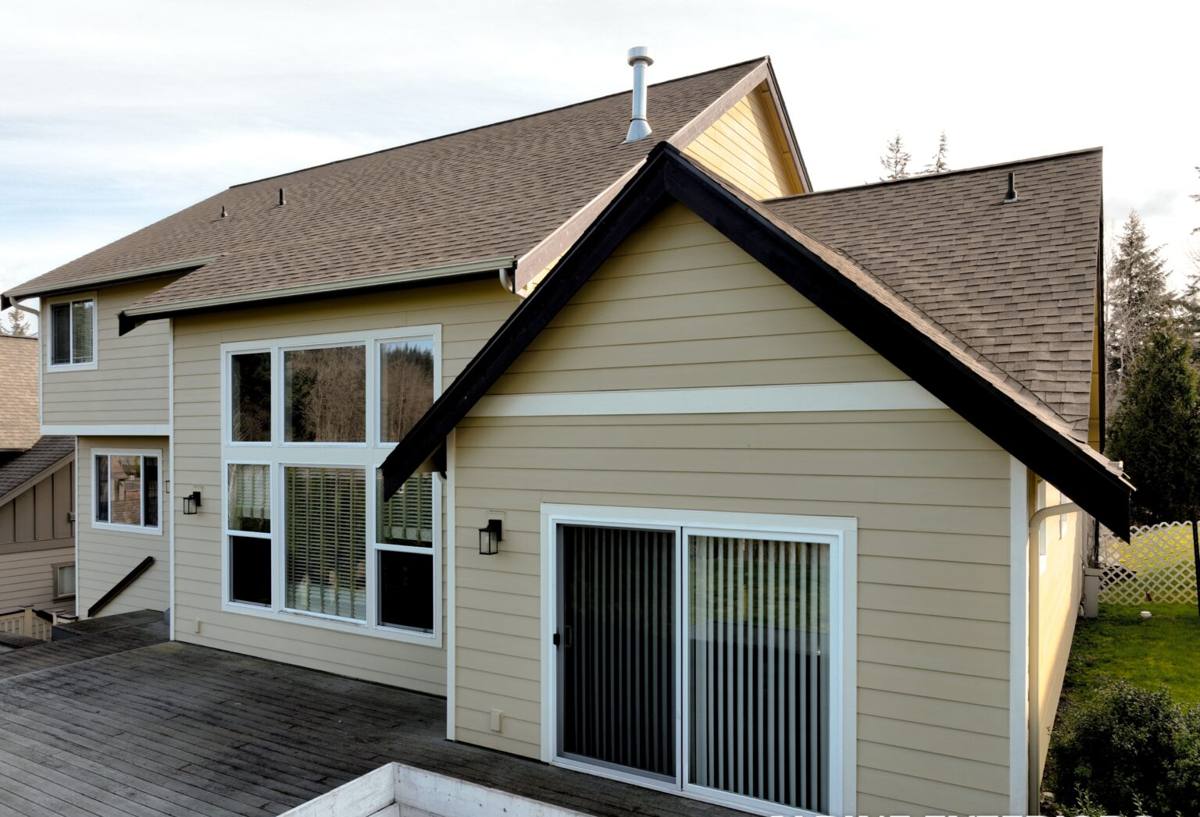
What Board & Batten Siding Actually Is
The Look Versus the System
Traditionally, board and batten meant wide vertical boards installed with a gap between them, then thin strips (battens) nailed over the gaps to cover the seam. On a modern fiber cement home, that's usually reproduced one of two ways: true individual vertical panels with separate trim battens over each seam, or a single factory-scored panel that mimics the board-and-batten pattern without as many field-cut seams. Both can look identical from the curb. They do not perform identically, and the difference matters more here than it would in a dry climate.
Where It Gets Used
We see board and batten used as a full-house siding choice, as an accent on gables and dormers over a horizontal lap field, and on porch surrounds and entry features. Each of those applications has a different exposure to weather, and each needs to be detailed differently — a gable accent thirty feet up has different wind-driven rain exposure than a covered porch wall at eye level.
Why This Style Needs Extra Discipline in Our Climate
Every Vertical Seam Is a Water Path
Horizontal lap siding is designed to shed water downward across overlapping courses — gravity does most of the work. Board and batten runs the seams vertically, which means every batten joint is a direct path for wind-driven rain to travel down the wall if it isn't flashed and gapped correctly. In a climate with steady rainfall and gusty coastal-influenced storms, that's not a minor detail — it's the difference between siding that lasts decades and siding that's rotting behind the battens in under ten years.
Moss Doesn't Care How the Siding Looks
The long moss season around Whatcom County affects board and batten differently than lap siding. Moss and algae take hold fastest on surfaces that stay damp and shaded — the underside of battens, inside corners, and north-facing walls under tree cover are all prime spots. On a poorly installed job, moss growth on top of trapped moisture behind the battens is a much bigger problem than moss growth on a dry, well-ventilated surface. It's a cosmetic issue on the surface and a durability issue underneath.
Salt Air and Coastal Exposure
Homes with exposure to salt-laden air see accelerated wear on fasteners, caulking, and unprotected wood trim. Fiber cement itself doesn't corrode, but the fasteners, flashing metal, and any wood battens used with the wrong products absolutely can. This is one more reason material choice and fastener choice matter as much as the visual pattern.
Why We Only Install This in James Hardie Fiber Cement
We get asked why we don't offer board and batten in vinyl, LP SmartSide, or primed wood, since all three are cheaper up front and all three are marketed with a similar look. Here's our honest answer, product by product:
Vinyl Board and Batten
Vinyl handles moisture fine on its own — it doesn't rot — but it moves a lot with temperature swings, and the vertical battens on a vinyl system rely on overlapping channels rather than true flashing. In sustained wind-driven rain, those channels are more prone to intrusion than a properly flashed fiber cement joint, and once water gets behind vinyl there's no fixing the sheathing without pulling siding. It's also a thinner, more visibly "plastic" look up close, which matters on a style people choose specifically for its architectural presence.
LP SmartSide and Primed or Engineered Wood
Engineered wood and primed wood products perform well when every cut edge is sealed and every seam is caulked and maintained on schedule. That's a real commitment in a climate where those seams are wet more months than they're dry. Miss a resealing cycle on a wood-based product here and moisture gets into the substrate at exactly the vertical joints this siding style is built around. We're not saying these products fail — we're saying they demand a maintenance discipline that most homeowners don't keep up with, and the failure mode when it's missed is expensive.
Why Hardie Fits This Application
James Hardie fiber cement doesn't absorb water into its core the way wood-based products can, it doesn't expand and contract with humidity the way vinyl does, and it's engineered specifically for climates like ours through the HZ5 product line. Paired with correctly detailed flashing and a factory ColorPlus finish that doesn't rely on field-applied paint at every seam, it's the version of this style we're willing to put our name behind and back with a real installation.
What a Correct Board & Batten Installation Involves
Water Management Comes Before Anything Visible
The panel and batten pattern is the part everyone sees. The part that determines whether it lasts is underneath: a weather-resistant barrier installed correctly, a drainage plane (rain screen) that lets any moisture that does get behind the siding drain and dry out instead of sitting against the sheathing, and flashing at every horizontal transition — window heads, roof lines, and butt joints.
Layout and Fastening
Battens need consistent spacing planned before the first panel goes up, not adjusted on the fly. Fasteners have to hit framing at the correct spacing and depth — overdriven or underdriven nails are one of the most common causes of premature failure on any fiber cement job, board and batten included, because they compromise the seal at every single seam this style depends on.
Caulk Is a Backup, Not the Plan
A board and batten job that depends on caulking to keep water out is a job that will fail the moment that caulk ages, cracks, or is skipped during a repaint. Correctly installed, the flashing and drainage plane do the real work, and caulk is a secondary line of defense — not the only one.
Here's what we check on every board and batten install before we call it finished:
- Weather-resistant barrier installed with proper overlaps and no punctures left unsealed
- Rain screen or drainage gap present behind the siding field, not just at accent areas
- Flashing installed at every window, door, and roof-to-wall transition before panels go up
- Battens fastened to framing at manufacturer-specified spacing, not just to the panel
- Fastener depth checked — no overdriven heads that break the panel's water seal
- Gaps and clearances at grade, decks, and roof lines meet Hardie's published minimums
- ColorPlus finish touch-up limited to factory-matched product, not generic paint
Board & Batten vs. Other Siding Approaches
Homeowners comparing board and batten to other options in Cordata often want to know how it stacks up on upkeep and resilience, not just looks. Here's a straightforward comparison based on how each performs in our specific climate conditions:
| Factor | Board & Batten (Hardie) | Horizontal Lap (Hardie) | Vinyl Board & Batten |
|---|---|---|---|
| Water-shedding design | Good, if flashed and gapped correctly | Best — gravity-fed overlap by design | Relies on channel overlap, more joint exposure |
| Moss/algae resistance on surface | Good with factory finish | Good with factory finish | Fair — surface can stay damp longer |
| Installation sensitivity | High — many vertical seams to detail | Lower — fewer critical joints | Moderate |
| Fire performance | Non-combustible | Non-combustible | Combustible |
| Typical maintenance | Periodic wash, inspect seams | Periodic wash | Periodic wash, watch for warping |
What Drives Cost on a Board & Batten Job Here
We don't quote a job without seeing the house, but the same handful of factors move the price up or down on nearly every board and batten estimate we write in this area:
| Cost Factor | Why It Matters |
|---|---|
| Existing siding removal | Tear-off and disposal of old siding and any water-damaged sheathing adds labor before the new system starts |
| Wall height and access | Multi-story walls, steep roof lines, and limited equipment access increase labor time and safety setup |
| Full-house vs. accent use | A gable or entry accent costs less than re-siding an entire elevation in board and batten |
| Trim and corner complexity | More windows, dormers, and roof transitions mean more flashing and cut detail per square foot |
| Sheathing or framing repair | Rot found once old siding comes off is priced separately and can't be estimated sight unseen |
| Color and finish selection | Factory ColorPlus finishes vary slightly in cost by line and color depth |
Why a Crew That Already Works Cordata and Sudden Valley Matters
Board and batten forgives fewer mistakes than horizontal lap, and it's exactly the style where a crew's familiarity with local conditions shows up in the finished product. A crew that regularly works Whatcom County knows which walls in this area take the worst of the wind-driven rain and need extra flashing attention, understands how shaded, tree-covered lots around Sudden Valley affect where moss takes hold first, and has already worked through the local permitting and inspection process enough times that it doesn't slow the job down. That familiarity doesn't show up in the price of the estimate — it shows up ten years later in whether the siding is still doing its job.
It also matters for something less obvious: matching. If you're doing board and batten as an accent over existing Hardie lap siding, or adding onto a home that already has Hardie somewhere on it, a crew that works with this product regularly is far more likely to get color and reveal matching right than one that installs it occasionally.
Living With Board & Batten Through a Long Moss Season
Correct installation gets you most of the way to low-maintenance siding, but board and batten in this climate still benefits from basic seasonal attention. None of this is complicated, but skipping it is how small issues become expensive ones.
- Rinse the siding — especially shaded, north-facing walls — once or twice a year to slow moss and algae buildup before it takes hold
- Keep gutters clear so overflow doesn't run down battens and concentrate water at the same joints repeatedly
- Trim back vegetation and tree cover that keeps specific wall sections damp and shaded longer than the rest of the house
- Walk the exterior after major windstorms and check for any loose or missing trim pieces around penetrations
- Have caulking at penetrations (not the main seams, which shouldn't depend on caulk) inspected every few years and refreshed with matched product if needed
Get a Straight Answer for Your Home
Board and batten can be a great fit for a Cordata or Sudden Valley home when it's detailed for this climate instead of installed like it's going on a house in a dry inland region. If you're weighing this look against a more traditional lap profile, or you already know it's what you want and just need it done right, we're happy to take a look at your home and walk you through what that specific job would involve. Reach out for a free, no-pressure estimate — we'll tell you honestly what your home needs, not just what's easiest to sell.