 Sudden Valley Siding
 Decking Built for Ferndale's Weather, Not Against It
Ferndale sits close enough to the water that homes here deal with a combination most inland decks never see: salty, moisture-laden air, long stretches of driving rain off the water, and a moss season that can run from October well into spring. A deck that would hold up fine in a drier part of the state can start showing problems in Ferndale within a couple of seasons if it wasn't built with this exposure in mind. That's true for wood decks, and it's true for composite decking installed without attention to drainage and hardware.
Composite decking is a strong fit for this climate when it's specified and installed correctly. It doesn't need annual staining, it resists rot in a way untreated wood never will, and modern capped boards shrug off the surface moisture that feeds moss and algae growth. But "composite" isn't one product, and installing it correctly in a coastal, moss-prone county isn't the same job as installing it in Spokane or Sacramento. This page covers what that actually means for a Ferndale home.
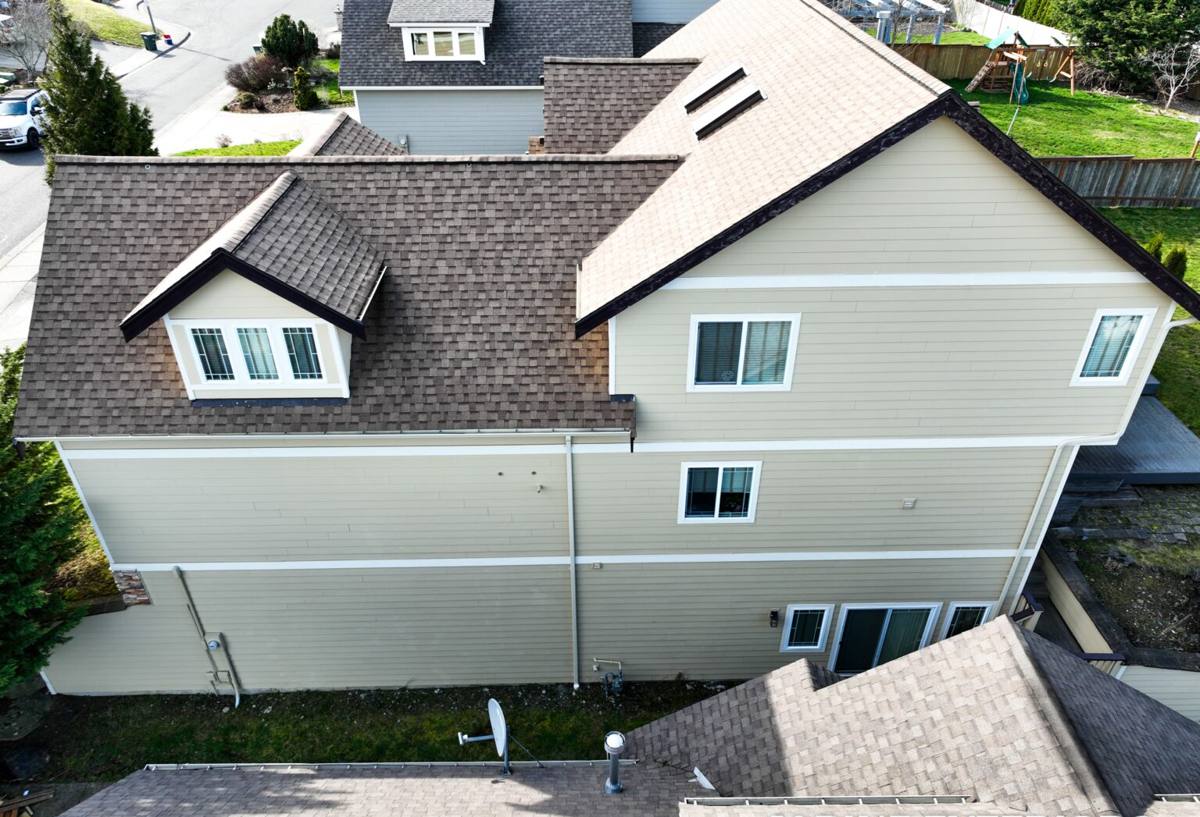
What Composite Decking Is, and Why the Type Matters Here
Composite decking is generally a blend of wood fiber and plastic, though the ratio and construction vary a lot between products. In a climate like ours, the differences aren't cosmetic — they affect how the board handles standing water, humidity, and salt-laden air over the long run.
Capped vs. Uncapped Composite
Capped composite boards have a plastic shell — usually a polymer cap — wrapped around a wood-plastic composite core. That cap is what keeps moisture, salt residue, and organic grime from soaking into the fibers underneath. Uncapped composite, which was more common in older product lines, exposes the wood-fiber core directly to the weather. In a dry climate that's a minor durability tradeoff. In Whatcom County, where boards stay damp for days at a time during the fall and winter, uncapped composite is far more prone to surface staining, moisture absorption at the core, and mold or moss taking hold in the exposed fiber. We steer clients toward fully capped boards for exactly this reason — it's not a brand preference, it's a moisture-management decision.
PVC Decking as an Alternative
Some homeowners ask about cellular PVC decking instead of wood-plastic composite. PVC contains no wood fiber at all, so it has effectively zero organic material for moisture or mold to latch onto. It costs more up front and can look slightly more "plastic" underfoot than a good composite board, but in a high-moisture, high-moss environment it's worth discussing as an option, especially for decks that stay shaded or get limited direct sun to dry out.
What a Correct Installation Actually Involves
Composite boards themselves are low-maintenance, but the structure underneath them is still ordinary lumber, and that's usually where problems start in this climate. A correct install pays as much attention to what's hidden as to what's visible.
Framing and Ledger Details
The ledger board — where the deck attaches to the house — needs proper flashing and a gap or drainage plane so water doesn't sit against the siding or rim joist. This is the single most common failure point we see on older decks in this region, composite or wood, and it has nothing to do with the decking material itself.
Fastening
Most quality composite systems use a hidden fastener clip system rather than face screws, which leaves a cleaner surface and eliminates the screw-hole entry points where water and grime tend to collect. In a salt-air environment, fastener material matters too — stainless steel or coated fasteners rated for coastal exposure resist corrosion and staining far longer than standard exterior-grade hardware.
Drainage and Airflow Underneath
Composite boards don't rot, but a deck built low to the ground with poor airflow underneath will trap moisture, encourage moss and algae on the board surface, and shorten the life of the framing below. Proper joist spacing, ventilation, and in some cases a drainage membrane under the deck make a real difference in how much moss you're scrubbing off in March.
Expansion Gaps
Composite material expands and contracts with temperature and moisture more than most homeowners expect. Gapping between boards, and around fixed objects like posts and walls, has to follow the manufacturer's spec — too tight and boards can buckle after a wet winter; too loose and you get an uneven, unfinished-looking deck.
Composite vs. Wood vs. PVC: A Ferndale-Specific Comparison
| Factor | Wood (cedar/fir) | Capped Composite | Cellular PVC |
|---|---|---|---|
| Moss/algae resistance | Low without regular cleaning | Good, especially with grooved/textured surface | Very good |
| Salt air / corrosion exposure | Fasteners and finish both vulnerable | Board unaffected; fastener quality still matters | Board unaffected; fastener quality still matters |
| Maintenance routine | Annual cleaning, periodic staining/sealing | Periodic washing, no staining | Periodic washing, no staining |
| Upfront cost | Lowest | Mid-range | Highest |
| Typical lifespan with proper install | 15-20 years with upkeep | 25-30+ years | 25-30+ years |
None of these is universally "right" — a wood deck that's properly maintained can still serve a Ferndale home well. The table above is meant to set honest expectations for maintenance time and moisture behavior, not to push one product as the only good answer.
Our Process for a Ferndale Composite Deck
- On-site assessment. We look at drainage, sun exposure, existing framing condition, and how close the deck sits to grade or vegetation that holds moisture.
- Material selection. We walk through capped composite and PVC options based on your budget, sun exposure, and how much moss pressure that particular spot on the property tends to get.
- Framing repair or build-out. Any rot, undersized joists, or missing flashing gets addressed before a single composite board goes down — this is not an area to cut corners on a coastal property.
- Installation. Hidden fastening, correct expansion gaps, and coastal-rated hardware throughout.
- Walkthrough. We go over basic care so the deck actually reaches its expected lifespan.
Maintaining a Composite Deck Through Whatcom County's Moss Season
Composite decking cuts maintenance drastically compared to wood, but "low-maintenance" doesn't mean "no maintenance" in this climate. A little seasonal attention goes a long way toward keeping the surface clean and the structure dry underneath.
- Sweep debris (needles, leaves, seed pods) off the deck regularly — trapped organic matter is what feeds moss and algae growth on any surface, composite included.
- Wash the deck with a soft-bristle brush, mild soap, and water once or twice a year, more often on shaded sections that stay damp longer.
- Avoid pressure washers on the highest settings directly against the board surface — it can wear the cap layer over time on some products.
- Check that gaps between boards and around the deck perimeter stay clear so water keeps draining rather than pooling.
- Look underneath the deck once a year for standing water, blocked drainage, or framing that's staying wet longer than it should.
- Rinse off salt residue after storms if the deck sits in a spot with direct coastal exposure.
Mistakes We See on Existing Decks in This Area
A lot of our composite decking calls in the Ferndale area start as repair or replacement jobs, not new builds. The recurring issues are rarely about the composite boards themselves — they're almost always about what was done underneath them:
- No flashing or gap at the ledger board, leading to moisture damage against the house long before the decking shows any wear.
- Decking installed tight to grade or dense landscaping with no airflow, turning the underside into a permanent damp zone.
- Standard hardware store fasteners used instead of corrosion-resistant hardware, leaving rust streaks on light-colored boards within a couple of years.
- Boards installed with no expansion gap, causing buckling after the first wet Whatcom County winter.
Every one of these is preventable with correct installation practices — it's not a reason to avoid composite decking, it's a reason to be selective about who installs it.
Why a Crew That Already Works This Area Makes a Difference
Ferndale's exposure to salt air and sustained coastal rain isn't the same as what a contractor working mostly in drier inland areas deals with day to day. A crew that regularly builds and repairs decks in this part of Whatcom County has already seen which framing details fail here, which fastener grades hold up, and how much moss pressure a given site orientation is likely to get. That local pattern recognition is what separates a deck that looks good on install day from one that still looks and drains well five winters later.
If you're weighing composite decking for a home in Ferndale or elsewhere around Sudden Valley, we're glad to take a look at your site and talk through what makes sense for your budget, sun exposure, and how the property drains. Use the form below to request a free, no-pressure estimate.