 Sudden Valley Siding
 Siding Replacement Built for Columbia's Conditions, Not a National Average
Homes in the Columbia area near Sudden Valley don't fail the same way homes in a dry climate do. Around here, siding doesn't usually crack from sun exposure first — it fails from the inside out, from years of moisture finding its way behind panels that were never properly flashed, from moss holding water against a wall for months at a time, and from salt-tinged wind off the water working into every seam and fastener hole. A siding replacement done right in this area has to be engineered for that reality, not for a generic install that would hold up fine somewhere drier.
This page focuses on one job, done in one area: full siding replacement for Columbia homes. Not a repair, not a patch — a proper tear-off and re-side that accounts for what Whatcom County weather actually does to a house over the course of 10, 20, or 30 years.
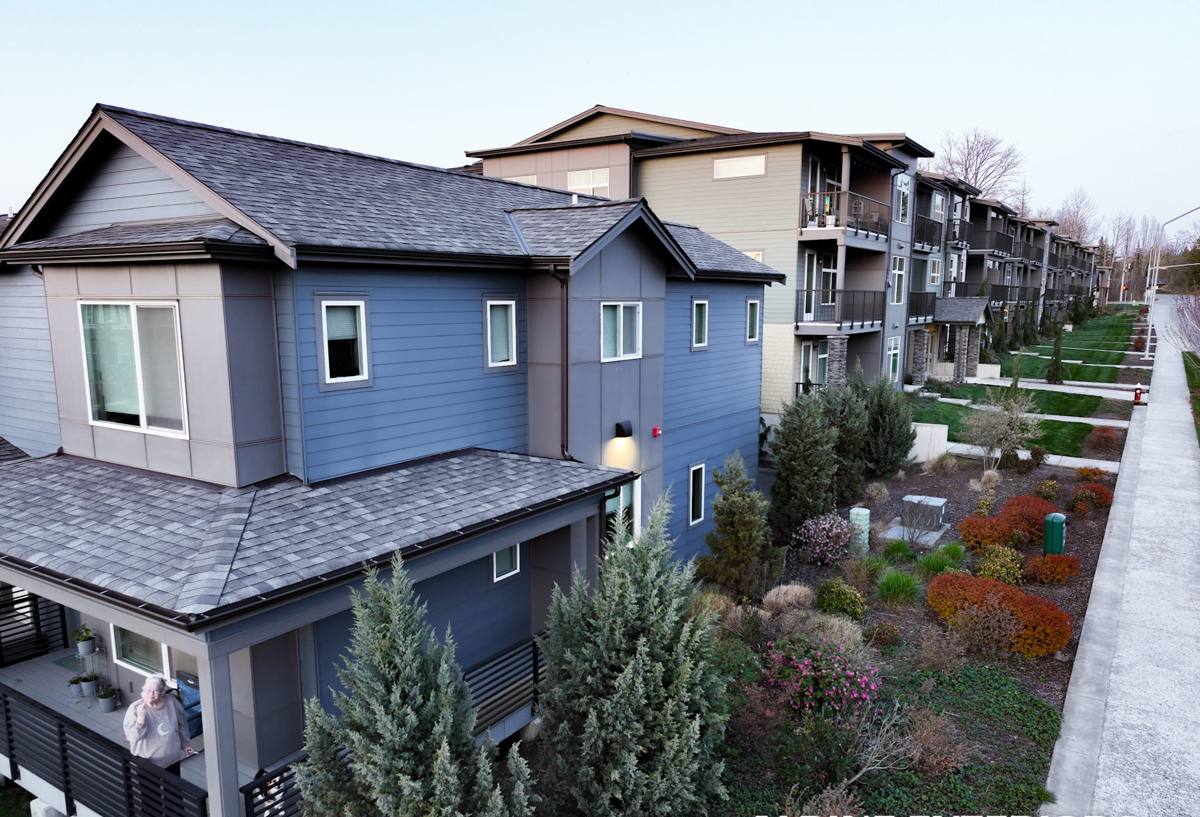
What Whatcom County's Climate Actually Does to Siding
Driving Rain and Sustained Moisture
This region doesn't just get rain — it gets long stretches of low-intensity, wind-driven rain that finds every gap in a building envelope. Siding that isn't lapped, flashed, and sealed correctly doesn't leak dramatically; it leaks slowly, over years, which is often worse because the damage isn't discovered until sheathing or framing underneath is already compromised.
Moss and Prolonged Shade
Wooded lots, tree cover, and long damp seasons mean moss and algae growth on siding is a near-constant battle for local homes. Moss doesn't just look bad — it holds moisture against the siding surface far longer than open air would, which accelerates rot in wood-based products and stresses paint and caulking on any material.
Salt Air and Wind Exposure
Homes closer to the water and exposed hillsides deal with a fine salt content in the air that speeds up corrosion on fasteners, trim flashing, and any metal components in the wall assembly. Over time, that corrosion can compromise the very hardware holding siding in place, which is why fastener choice and flashing detail matter as much as the siding material itself.
Signs a Columbia Home Needs Siding Replacement, Not Just Repair
- Soft or spongy spots when you press on the siding, especially near the bottom courses or around windows
- Persistent moss or dark staining that comes back within weeks of cleaning
- Paint or factory finish that's chalking, bubbling, or peeling in patches rather than evenly
- Visible gaps, warping, or cupping in individual panels or boards
- Rising energy bills with no other explanation, suggesting the wall assembly is no longer sealing properly
- Interior signs — musty smell, discoloration on interior walls near exterior corners, or trim that's swelling
- Siding that's original to a home built more than 20-25 years ago, especially wood-based products
What a Correct Siding Replacement Actually Involves
Tear-Off and Sheathing Inspection
The old siding comes off entirely — not just the visible layer, but the trim and flashing behind it. This is the point where hidden rot, past water intrusion, or inadequate house wrap gets found. Any contractor who skips this step and re-sides over existing problems is setting the new siding up to fail on the same timeline as the old.
Water Management Layer
Given how much rain this area sees, the water-resistive barrier and flashing details behind the siding matter as much as the siding itself. Proper window and door flashing, correctly lapped house wrap, and rainscreen or drainage gap detailing (where appropriate) give bulk water a way out instead of a place to sit.
Material Selection
This is where a lot of homeowners get steered wrong. Not every siding product handles this region's moisture and moss exposure the same way, and the material decision affects maintenance for decades, not years.
Installation to Manufacturer Spec
Fiber cement siding, in particular, is unforgiving of shortcuts. Fastener spacing, clearance from grade and roof lines, caulking at butt joints, and proper flashing above trim are all spelled out by the manufacturer for a reason — skip them and you void the warranty and shorten the product's real-world life, regardless of how good the material is on paper.
Why We Install Only James Hardie Fiber Cement
We don't install vinyl, LP SmartSide, primed spruce, cedar, or other fiber cement brands. That's a deliberate standard, not a lack of options. In a climate defined by sustained moisture, moss, and salt air, the products that struggle most are the ones most sensitive to water — engineered wood can swell and delaminate at cut edges if moisture gets in, vinyl can warp and doesn't offer the same fire resistance, and cedar demands a maintenance schedule most homeowners don't keep up with once the novelty wears off.
James Hardie fiber cement is non-combustible, engineered specifically for moisture and pest resistance, and available in climate-specific HZ formulations. Its factory-applied ColorPlus finish is baked on under controlled conditions, which holds up far better against this region's damp, low-light seasons than field-applied paint does. It also carries a strong transferable warranty — but only when installed to spec, which is the whole reason installation quality gets equal billing with material choice on this page.
Comparing Siding Materials for This Climate
| Material | Moisture Behavior Here | Maintenance Reality | Our Position |
|---|---|---|---|
| James Hardie fiber cement | Engineered for wet climates; resists moisture-driven swelling | Occasional wash; factory finish holds color | What we install |
| Vinyl siding | Can warp/gap in temperature swings; seams allow moisture behind panel | Low, but limited repair options once damaged | Not installed |
| LP SmartSide / engineered wood | Vulnerable at cut edges and fastener points if sealing fails | Requires diligent caulk/paint upkeep | Not installed |
| Cedar / wood siding | Absorbs moisture; prone to rot without consistent upkeep | High — regular staining/sealing needed | Not installed |
| Other fiber cement brands | Similar base material, different formulation/finish process | Varies by manufacturer | Not installed — we standardized on Hardie |
Our Process, Start to Finish
- Walk-through and assessment — we look at existing siding, trim, moisture history, and shaded or moss-prone areas specific to your lot
- Written estimate — clear scope, material line (Hardie plank, panel, or shingle style), and timeline, no vague allowances
- Tear-off — full removal of old siding and trim, with sheathing inspected for hidden damage
- Repair as needed — any rotted sheathing or framing is addressed before anything new goes up
- Water management install — house wrap, flashing, and drainage detailing done to code and manufacturer spec
- Hardie siding installation — installed per James Hardie's fastening, clearance, and joint-treatment requirements
- Trim, caulking, and final inspection — walk-through with the homeowner before we call the job done
What Drives the Cost of a Siding Replacement
| Factor | Why It Matters |
|---|---|
| Home size and wall complexity | More corners, gables, and dormers mean more cuts, trim, and labor time |
| Extent of hidden damage | Rotted sheathing found during tear-off adds repair scope before new siding goes up |
| Siding profile chosen | Lap, shingle, and panel styles differ in material and install labor |
| Trim and accessory work | Fascia, soffit, and window trim replacement often gets bundled in for a clean finish |
| Access and site conditions | Steep lots, mature landscaping, or limited access around a home add time |
We don't quote a number without seeing the home first — anyone who does is guessing, and guesses on a job this size tend to turn into change orders later.
Why Hiring a Crew That Already Works Columbia Matters
A crew that's already done siding work in Sudden Valley and the surrounding Columbia area knows which sides of a house typically take the worst weather exposure, where moss tends to build up fastest, and how the local moisture cycle interacts with different lot orientations and tree cover. That's not something you get from a national install crew passing through — it comes from doing the work in this specific climate, repeatedly, and seeing what holds up and what doesn't over the following years.
It also means accountability. A local, established contractor is still here next year if a warranty question comes up, and has a reputation in the area worth protecting on every job, not just the one in front of them.
If your Columbia-area home's siding is showing its age — or you just want an honest read on whether repair or full replacement makes more sense — we're happy to come take a look. The estimate is free, there's no pressure, and you'll get a straight answer either way.