 Sudden Valley Siding
 Board & Batten Siding in the Columbia Area of Sudden Valley
Homeowners in the Columbia area of Sudden Valley tend to ask for board and batten siding for one of two reasons: they want the clean, vertical-line look on a home that's due for new siding anyway, or they're restoring a house that already has board and batten and needs it done right this time. Either way, this is a local service page specifically about that siding style in this part of Whatcom County — not a generic overview. The short version: board and batten is a great fit for the look a lot of Columbia homeowners want, but it is less forgiving of sloppy installation than standard lap siding, and this region's climate makes that gap matter.
Whatcom County homes deal with salt air carried in off the water, driving rain that comes in sideways during fall and winter storms, and a moss season that can run most of the year on shaded, north-facing walls. None of that is unique to Columbia, but it's real, and it's the backdrop for every decision below — from panel material to fastener spacing to how we detail the bottom of every batten.
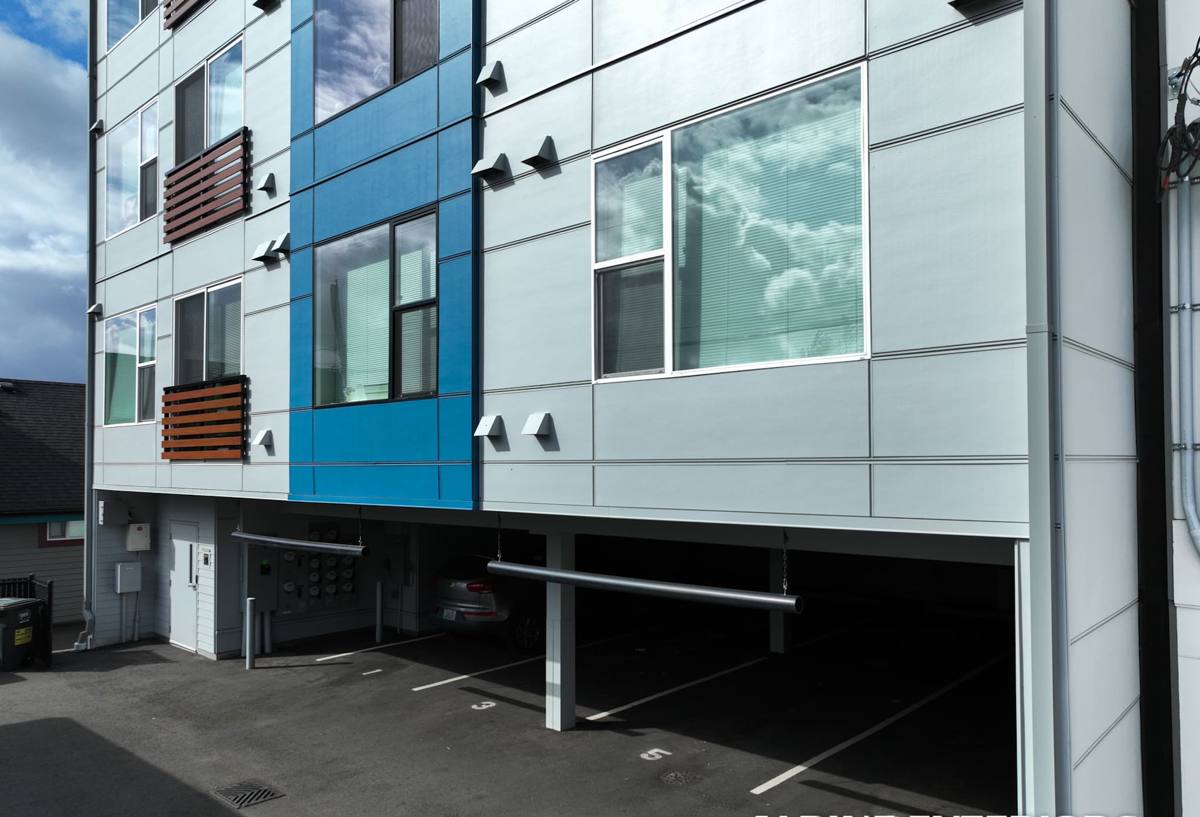
What Board & Batten Siding Actually Is
Board and batten is a vertical siding pattern: wide flat panels (or boards) installed vertically, with narrower strips — the battens — covering the seams between them. It's an older American siding style that's come back strong on Pacific Northwest homes because it reads as clean and modern while still looking like it belongs on a wooded lot.
We install this pattern using James Hardie's engineered fiber cement system — specifically HardiePanel vertical siding with Hardie's matching batten trim, finished in factory-applied ColorPlus. We do not install board and batten in vinyl, LP SmartSide, primed wood, or cedar. That's a deliberate standard, not an oversight, and it matters more with this particular siding style than with most others.
Why the Material Choice Matters More With Board & Batten
Vertical siding has more seams running with the grain of water flow, more cut edges exposed at window and door returns, and — with true board and batten — a batten strip sitting directly over a seam where two panels meet. If that seam isn't backed and sealed correctly, water finds it. Fiber cement handles that reality better than wood-based or vinyl alternatives because it doesn't swell, rot, or deform at the cut edge the way engineered wood products can, and it holds paint and factory finish at that edge far longer than primed wood siding does.
What Columbia's Climate Actually Demands From This Siding
Three things stand out for homes in this area, and each one changes how we detail the job:
Driving Rain and Wind-Driven Moisture
Whatcom County storms don't always fall straight down. Wind-driven rain gets pushed sideways into vertical seams and batten joints, which is exactly where board and batten siding is most vulnerable if it's installed as a purely decorative pattern instead of a real drainage system. The panels have to be installed over a drainable weather-resistive barrier with a true rainscreen gap, not nailed flat to sheathing.
Salt Air
Salt-laden air accelerates corrosion on exposed metal — fasteners, flashing, and trim — faster than it does further inland. Every fastener we use is corrosion-resistant, and every piece of flashing is either factory-finished or a material that won't chalk and streak the siding below it within a few years.
A Long Moss Season
Shaded walls under tree cover, common on wooded Sudden Valley lots, stay damp for extended stretches, and moss and algae take hold on any surface that holds moisture at the surface. Fiber cement with a factory ColorPlus finish resists this far better than bare or site-primed wood, but the finish only performs as advertised if the panel is actually drying out between rain events — which comes back to the rainscreen gap, not the paint.
What a Correct Board & Batten Installation Involves
This is the part that separates a board and batten job that looks good for two years from one that looks good for twenty. On every install we do:
- A drainable house wrap or weather-resistive barrier installed and lapped correctly at every seam, window, and penetration
- Vertical furring strips to create a true rainscreen air gap behind the panels, not panels nailed directly to the barrier
- Factory-cut and factory-primed panel edges kept intact wherever possible; any field cuts sealed per Hardie's application instructions
- Batten strips fastened through the panel into framing at correct spacing, not just glued or face-nailed into the panel alone
- Z-flashing and proper head flashing at every horizontal transition, window, and door — the single most common failure point on vertical siding jobs done wrong
- Corrosion-resistant fasteners rated for coastal/marine-adjacent exposure
- A minimum clearance gap at grade, decks, and roof lines so the bottom of the siding never sits in standing water or contacts soil
Skip the rainscreen gap or the flashing detail, and the siding can still look correct on install day. The problems show up eighteen months to five years later — behind the wall, where nobody's looking until there's a stain, a soft spot, or a moss line marking exactly where water has been sitting.
Board & Batten vs. Lap Siding: What Actually Changes
| Factor | Board & Batten | Traditional Lap Siding |
|---|---|---|
| Water shedding path | Vertical seams need battens + rainscreen to drain correctly | Horizontal overlap sheds water by design |
| Visual style | Clean vertical lines, modern/farmhouse look | Traditional horizontal shadow lines |
| Installation sensitivity | Higher — flashing and gap details matter more | More forgiving of minor field variation |
| Best suited for | Accent walls, gables, full facades on homes wanting a distinct look | Whole-home siding where a classic look is preferred |
| Hardie product used | HardiePanel vertical siding + batten trim | HardiePlank lap siding |
Neither style is "better" in the abstract — it comes down to what look the home is going for and whether the installer is set up to detail vertical seams correctly. We install both, but board and batten is the one where hiring experience matters most.
Our Process for Columbia Board & Batten Projects
1. On-Site Assessment
We look at wall orientation, shade exposure, existing moisture damage, and drainage at grade before we talk product. A north-facing wall under tree cover in Sudden Valley gets treated differently than a south-facing wall with full sun.
2. Tear-Off and Sheathing Check
Old siding comes off, and we inspect sheathing underneath for rot or existing moisture damage before anything new goes up. This is often where problems from a prior installation — especially old board and batten without a rainscreen — get found.
3. Weather Barrier and Rainscreen Install
Drainable wrap, correctly lapped, followed by vertical furring to create the air gap behind the panels.
4. Panel and Batten Installation
HardiePanel installed to Hardie's fastening schedule, battens set and fastened through to framing, flashing installed at every transition as the wall goes up — not added after the fact.
5. Finish and Walkthrough
Trim, caulking at appropriate joints only (not as a substitute for flashing), and a final walkthrough covering what to expect from the ColorPlus finish over the coming seasons.
Why a Crew That Already Works Columbia Matters
Board and batten forgives almost nothing when it's installed by someone unfamiliar with how this region's weather actually behaves. A crew that's done siding elsewhere in the country and treats every job the same way — same flashing details, same assumptions about how much rain the wall will see — is the crew whose board and batten jobs develop problems here first, because Whatcom County's combination of driving rain, salt air, and shaded moss conditions isn't the national average.
Working in and around Sudden Valley regularly means we already know what a wall exposed to lake-effect moisture and tree shade needs versus one in full sun, what fastener corrosion actually looks like a few years out in this air, and which details on an older Columbia-area home are worth re-checking during tear-off rather than assumed to be fine. That's not a marketing point — it changes which corners get extra attention before the first panel goes up.
Maintenance and What to Expect Long-Term
- Rinse siding annually, focusing on shaded and north-facing walls where moss and algae are most likely to establish
- Keep gutters and downspouts clear so water isn't dumping directly onto siding or pooling at the base of a wall
- Trim back vegetation and tree cover that keeps a wall section wet longer than the rest of the house
- Inspect caulking at trim joints every couple of years — recaulk before a gap opens, not after water's already gotten behind it
- Watch for any staining or soft trim at the base of the siding, which is the earliest visible sign of a drainage or flashing issue
Installed correctly, James Hardie board and batten siding with a proper rainscreen and flashing system is built to handle this climate for decades, backed by Hardie's warranty coverage on the product itself and by our own standards for how it goes on the wall.
If you're weighing board and batten for a home in the Columbia area of Sudden Valley, we're happy to take a look and walk you through what your specific walls need — no pressure, no obligation. Request a free estimate using the form below.