 Sudden Valley Siding
 Roofing in Barkley Has Its Own Set of Problems
Barkley sits close enough to the water and the lake basin that its roofs take on a specific mix of punishment: salt-tinged air moving in off the Sound, long stretches of driving rain that don't let up for days, and a moss season that can run from early fall through late spring in a typical Whatcom County year. None of that is exotic on its own, but stacked together year after year, it shortens the useful life of a roof faster than most homeowners expect based on the shingle's rated lifespan alone.
A roof rated for 25 or 30 years on paper is tested against generic conditions, not against a Pacific Northwest microclimate where the substrate rarely gets a chance to fully dry out between storms. We've replaced roofs in this area that were nowhere near their "rated" age but had already failed underneath because moisture and moss had been doing quiet damage for years before anything showed up as a stain on the ceiling.
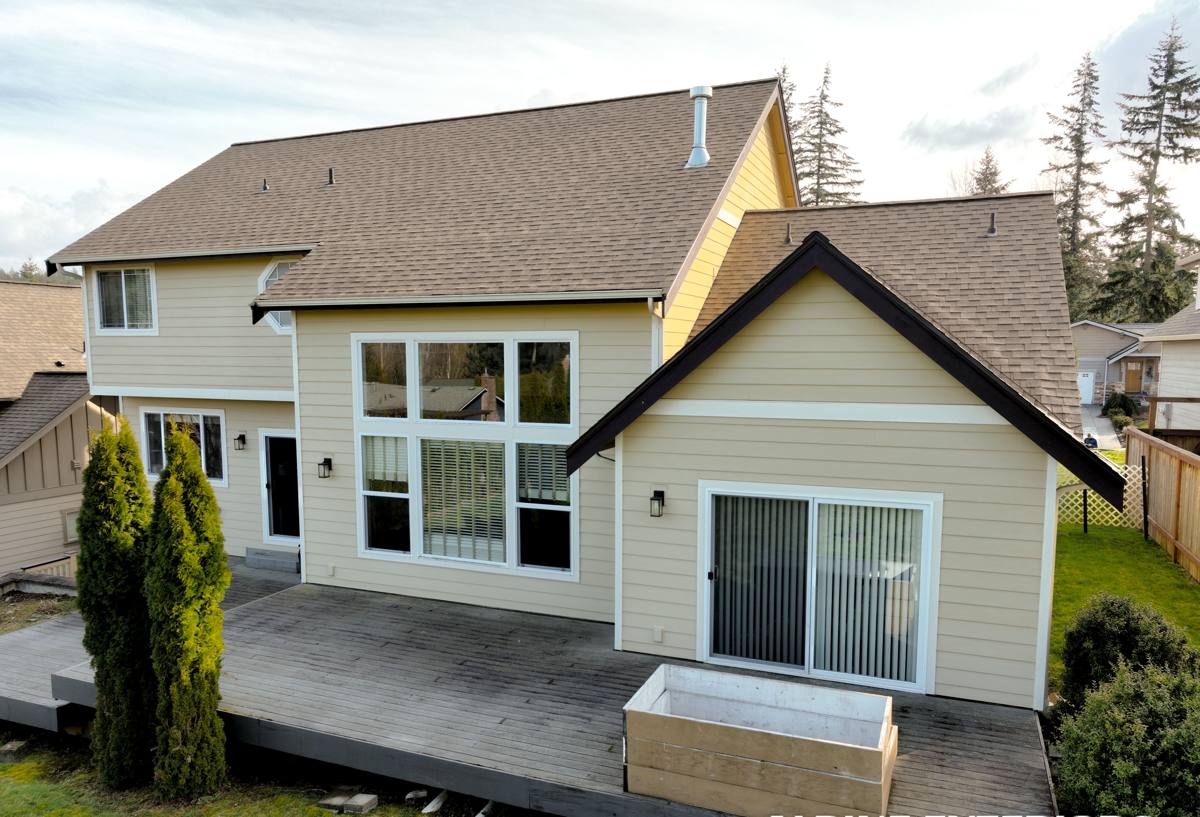
How Local Climate Shortens Roof Life
Salt Air and Metal Fatigue
Homes closer to open water deal with airborne salt that accelerates corrosion on exposed metal — flashing, fasteners, vent caps, and gutter hardware. Once corrosion starts at a fastener head or a flashing seam, water finds its way underneath the roofing material even if the shingles themselves still look fine from the ground.
Driving Rain and Wind-Driven Water
Rain that comes in sideways during a windstorm behaves differently than a straight downpour. It gets pushed up under shingle tabs, around chimney flashing, and into any gap at a roof-wall intersection. A roof that would be perfectly adequate in a drier climate needs tighter detailing here — proper shingle nailing patterns, correctly lapped underlayment, and step flashing that's actually stepped correctly, not just caulked.
Moss: More Than a Cosmetic Problem
Moss holds moisture against the roof surface long after the rain has stopped, and it works its way under shingle edges as it grows. On a roof with mature moss growth, what looks like a surface issue is often already a moisture problem in the decking. Areas with heavy tree cover and less direct sun — common around Barkley and the Sudden Valley area — see moss return faster than more exposed lots, which changes how a roof should be built and maintained from day one.
Signs Your Roof Needs Replacement, Not Another Repair
Not every roof problem calls for a full tear-off. But there's a point where patching becomes a waste of money because the roof system as a whole has aged out. Here's what tells us a repair won't hold:
- Granule loss heavy enough that you can see bare fiberglass mat on multiple shingles
- Shingles that are cupping, curling at the edges, or cracking when lifted gently
- Soft spots or give underfoot when walking the roof (a sign the decking is wet or rotted)
- Daylight visible through the roof deck from inside the attic
- Persistent moss growth that returns within a season of cleaning, especially on north-facing slopes
- Flashing that's rusted through, loose, or was never properly stepped at walls and chimneys
- Interior water stains that show up in new locations after storms
- A roof older than 18–20 years that's never had underlayment or ventilation upgraded
If you're seeing two or more of these, it's worth a real inspection rather than another round of caulk and patch.
What a Correct Roof Replacement Actually Involves
Full Tear-Off, Not Overlay
We don't install a new layer over old shingles. Overlaying hides existing damage, adds weight, and voids most manufacturer warranties. A full tear-off lets us see the actual condition of the decking underneath — which, on older Barkley homes, often needs some sheet replacement due to years of trapped moisture.
Underlayment and Ice-and-Water Protection
Given how much wind-driven rain this area sees, we treat underlayment as more than a formality. Synthetic underlayment across the field, with self-adhering ice-and-water membrane at eaves, valleys, and any roof-to-wall transition, is standard practice here — not an upsell.
Flashing Done the Right Way
Step flashing at walls and chimneys, properly lapped valley metal, and corrosion-resistant fasteners matter more here than in drier regions because of the salt air and near-constant moisture cycling. This is the detail work that separates a roof that lasts from one that leaks within a few years.
Ventilation
A roof that can't breathe traps moisture in the attic, which speeds up decking rot and gives moss and mildew a head start from the inside out. Balanced intake and exhaust ventilation is part of a correct replacement, not something we skip to save a step.
Material Options for Barkley Homes
There's no single "best" roofing material — the right choice depends on your home's exposure, roof pitch, budget, and how much long-term maintenance you're willing to keep up with. Here's how the common options stack up for this specific climate:
| Material | Typical Lifespan | Moss/Moisture Behavior | Considerations Here |
|---|---|---|---|
| Architectural asphalt shingle | 25–30 years | Good with proper underlayment; moss-resistant granule options available | Best balance of cost and performance for most Barkley homes; our default recommendation for typical roof pitches |
| Standing seam metal | 40–50+ years | Excellent — sheds water fast, moss struggles to hold on smooth panels | Higher upfront cost; needs quality fasteners to resist salt-air corrosion long-term |
| Synthetic/composite shingle | 30–40 years | Very good moisture resistance, low water absorption | Good option for shaded lots with heavy moss pressure; higher material cost than asphalt |
| Cedar shake | 20–30 years with upkeep | Prone to moss and moisture retention without regular treatment | Requires the most ongoing maintenance in this climate; we'll walk you through the tradeoffs honestly before you commit |
For most homes in this area, a heavier-weight architectural shingle with a moss-resistant treatment gets the best combination of cost, appearance, and low maintenance. Metal makes sense on lower-slope sections or for homeowners planning to stay long-term and wanting to minimize future replacements.
Our Roof Replacement Process
1. Inspection and Honest Estimate
We start by getting on the roof, not just looking at it from the driveway. We check decking condition, flashing, ventilation, and how much moss or moisture damage is present, then give you a written estimate that separates what's needed from what's optional.
2. Material Selection
We'll walk through the options above based on your roof's pitch, sun exposure, and budget — no pressure toward the most expensive option if it doesn't fit your situation.
3. Tear-Off and Deck Repair
Old roofing comes off completely. Any soft or damaged decking gets replaced before anything new goes down — this is not an area to cut corners given how much moisture this region deals with.
4. Installation
Underlayment, ice-and-water membrane at vulnerable points, proper flashing, correctly spaced fastening, and balanced ventilation go in according to manufacturer specs, not shortcuts.
5. Cleanup and Walkthrough
We magnet-sweep for stray nails, clean up debris, and walk the finished roof with you so you know what was done and what to watch for going forward.
What Roof Replacement Costs Depend On
We won't quote a number without seeing the roof, but the main cost drivers are consistent from job to job:
| Factor | Why It Matters |
|---|---|
| Roof size and number of planes | More square footage and more valleys/hips mean more material and labor |
| Roof pitch and accessibility | Steep or hard-to-access roofs take longer and require more safety setup |
| Decking condition | Rotted sheathing found during tear-off adds material and labor not visible from the estimate walk |
| Material choice | Asphalt, metal, and synthetic options span a wide cost range, as shown above |
| Layers to remove | Tearing off multiple existing layers costs more in labor and disposal than a single layer |
Why a Crew That Already Works in Barkley Matters
A roofer who works this specific pocket of Whatcom County already knows which slopes hold moss longest, which roof styles struggle with ventilation, and how much extra flashing attention a home needs based on its exposure to wind and rain off the water. That's not something you get from a crew that mostly works inland or in drier parts of the state and treats every job the same way.
Local familiarity also means we're not guessing at permitting requirements or scheduling around this area's weather windows — we plan tear-offs for stretches when we can get a roof dried in before the next system rolls through, which matters more here than in climates with longer dry seasons.
After Your New Roof Goes On
A new roof still needs basic upkeep in this climate. Keep gutters clear so water isn't backing up under the eaves, have moss growth addressed before it establishes rather than after, and get an occasional visual check after major windstorms. A correctly installed roof with reasonable maintenance is what actually gets you the full lifespan out of whatever material you choose — the installation quality and the follow-through matter as much as the shingle brand.
If your roof is showing its age or you just want an honest read on how much life it has left, we're happy to take a look. Fill out the form below for a free, no-pressure estimate on your Barkley home.