 Sudden Valley Siding
 Sehome's Roof Sits at the Crossroads of Salt Air, Rain, and Moss
Homes in Sehome don't fail a roof inspection because of one dramatic storm. They fail because of what three things do to a roof, quietly, over years: salt-laden air off the water, driving rain that hits shingles sideways instead of straight down, and a moss season that runs far longer here than it does in drier parts of the country. Any one of these is manageable on its own. Together, they're why an asphalt shingle roof that would last 25 years in a dry inland climate often needs real attention well before that mark in this part of Whatcom County.
Salt Air and Metal Fasteners
Proximity to marine air accelerates corrosion on exposed metal — nail heads, flashing, vent stacks, and gutter hardware. When a roof is installed with the wrong fastener grade or with flashing that isn't properly lapped and sealed, corrosion shows up first as rust streaking, then as small leaks around penetrations long before the shingles themselves are worn out.
Driving Rain and Wind-Driven Water
Rain here doesn't always fall straight down. Wind-driven rain pushes water sideways and upward under shingle edges, at ridge caps, and around chimneys and skylights — the exact spots where a rushed installation cuts corners. A roof built for this climate has to assume water will try to get in from angles a fair-weather installation never accounts for.
The Long Moss Season
Whatcom County's cool, damp stretch of the year runs long, and shaded, north-facing roof slopes in Sehome can stay wet for days at a time. That's exactly the environment moss and algae need to take hold. Moss isn't just an appearance problem — its root structures work into shingle granules and butt joints, holding moisture against the roof deck and shortening the life of the shingles underneath it.
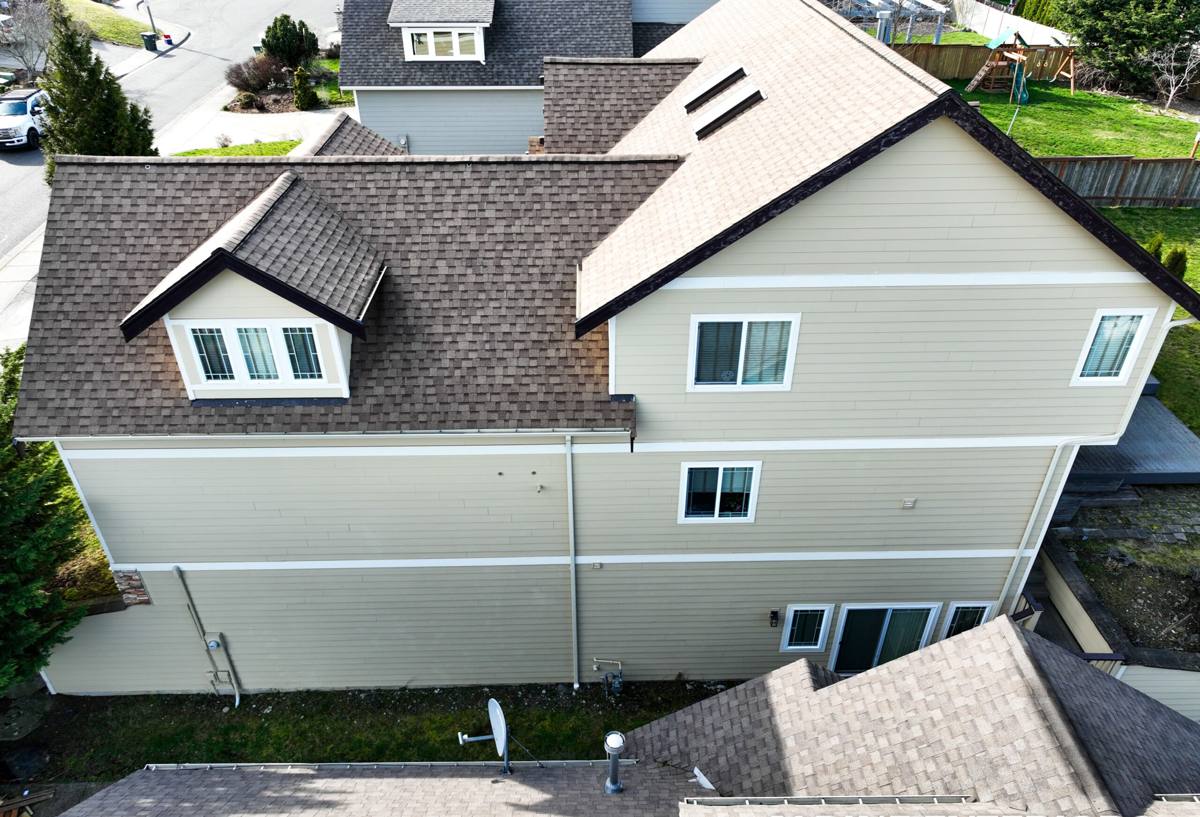
What a Correctly Installed Shingle Roof Needs Here
A "correct" asphalt shingle installation in Sehome isn't different in kind from a correct installation anywhere — it's the same fundamentals, applied without shortcuts, with a few details given extra weight because of the local climate.
Ice and Water Shield at Vulnerable Points
Self-adhering waterproof membrane belongs at eaves, valleys, and around every roof penetration — not just where code requires it, but anywhere wind-driven rain or ice damming could push water backward under the shingle course. This is cheap insurance during installation and expensive to add later.
Ventilation That Actually Balances
Intake at the soffits and exhaust at the ridge need to be sized to work together. Unbalanced ventilation traps moist air in the attic, which condenses on the underside of the roof deck and creates the kind of damp wood that rot and mold need. In a climate that's already damp outside, getting this wrong compounds the problem from the inside.
Flashing and Valley Details
Step flashing at walls and chimneys, properly woven or metal-lined valleys, and correctly lapped ridge and hip caps are where most leaks in this region actually start — not in the open field of shingles. These details take more time to do right and are the first thing an experienced local crew checks on an older Sehome roof.
Choosing the Right Shingle for This Climate
Not every asphalt shingle product is a good match for a marine, moss-prone climate. The differences that matter most here are algae resistance, wind rating, and how forgiving the product is of imperfect ventilation in an older attic.
| Shingle Type | Typical Lifespan | Best Fit For | Cost Factor |
|---|---|---|---|
| 3-tab (standard) | 15–20 years | Budget-focused re-roofs, less complex rooflines | Lowest upfront cost |
| Architectural / dimensional | 25–30 years | Most Sehome homes; better wind and impact performance | Moderate — most common choice |
| Algae-resistant (AR) architectural | 25–30 years | Shaded or north-facing roofs, homes with a history of moss/algae staining | Small premium over standard architectural |
| Impact-rated / premium | 30+ years | Homes wanting maximum durability and longer warranty terms | Highest upfront cost |
Why We Lean Toward AR Shingles Here
Algae-resistant shingles use copper-infused granules that discourage algae and moss growth over time. They cost a little more than standard architectural shingles, but on a shaded roof in this climate, that difference is usually smaller than the cost of an early cleaning or premature replacement caused by sustained moss growth. We'll walk through your roof's actual sun and shade exposure before recommending one shingle line over another — it depends on the specific slopes and tree cover on your property, not a blanket rule.
Our Asphalt Shingle Replacement Process
- Inspection and estimate. We look at the whole roof system — decking, flashing, ventilation, and the shingles themselves — not just surface wear, and give you a written scope before any work starts.
- Tear-off. Old shingles and underlayment come off down to the deck. We don't install a new roof over an old one — it hides deck problems and voids most manufacturer warranties.
- Deck inspection and repair. Any soft, delaminated, or water-damaged sheathing gets replaced before anything new goes down. This is the step that's easiest to skip and most expensive to skip wrong.
- Underlayment and ice/water shield. Synthetic underlayment across the field, with self-adhering membrane at eaves, valleys, and penetrations.
- Flashing. New step flashing, valley metal, and pipe boots — reused flashing is a common source of early callbacks and not something we do.
- Shingle installation. Installed to manufacturer nailing and exposure specs, which is also what keeps the manufacturer's warranty valid.
- Ventilation check. We confirm intake and exhaust are balanced for your attic's size, adding or correcting ridge and soffit venting as needed.
- Cleanup and walk-through. Magnetic nail sweep, debris haul-off, and a final walk-through so you know exactly what was done.
Signs a Sehome Roof May Be Due for Replacement
- Shingle granules collecting in gutters or at downspout outlets
- Shingles that are cupping, curling at the edges, or cracking
- Dark streaking or thick moss growth, especially on shaded slopes
- Daylight visible through the attic roof deck, or damp insulation below it
- Missing or lifted shingles after a windstorm
- Rusted or visibly deteriorated flashing around chimneys, vents, or skylights
- A roof that's 20+ years old and has never had a professional inspection
One or two of these on their own might just mean a repair. Several at once, or any active leak, usually means it's time to talk about full replacement instead of patching the same spots again.
Moss and Algae: Ongoing Care, Not Just a One-Time Fix
Even a well-installed, algae-resistant roof benefits from basic upkeep in a climate like this. Keeping gutters and valleys clear of needles and leaves prevents standing water from sitting against the shingle edge. Trimming back overhanging branches reduces both shade and the constant drip of moisture onto one section of roof. If moss does establish itself, it should be removed gently — soft washing or manual removal — rather than pressure-washed, which strips protective granules and does more damage than the moss itself.
Why a Crew That Already Works in Sehome Makes a Difference
Roofing crews who work across Sehome and the wider Sudden Valley area on a regular basis aren't guessing at how this climate treats a roof — they've seen which details hold up over a full Whatcom County winter and which ones come back as callbacks. That shows up in small but real ways: knowing which slopes on a typical local roofline stay wet longest, sizing ventilation correctly for older attic construction common in this area, and being close enough to respond quickly if a warranty question or storm-related issue comes up after the job is done. A roof replacement is not a job you want to re-hire for in three years.
Warranty Considerations Worth Understanding
Asphalt shingle roofs carry two separate warranties, and it's worth knowing the difference before you sign anything. The manufacturer's warranty covers material defects in the shingles themselves. The installer's workmanship warranty covers whether the roof was actually installed correctly. A shingle can be defect-free and still leak because of poor flashing work — which is exactly why we stand behind our own installation separately from whatever the shingle manufacturer covers. We'll explain both in plain terms before work begins, including what does and doesn't extend a manufacturer's warranty (proper ventilation and correct nailing pattern usually top that list).
If your Sehome roof is showing its age, or you'd just like an honest read on what shape it's in, we're happy to take a look. Use the form below to request a free, no-pressure estimate — we'll tell you what we actually see, not just what's easiest to sell.