 Sudden Valley Siding
 Storm Damage Roof Repair Built for South Hill Conditions
South Hill homes take a different kind of beating than a roof in a sheltered valley lot. Between exposure to wind gusts coming off open terrain, driving rain that finds every weak seam, and a moss season that seems to run longer every year in Whatcom County, roofs here age faster and fail in specific, predictable spots. Storm damage repair on South Hill isn't just patching a hole after a bad night of wind — it's understanding how this property's exposure and this region's weather pattern combine to create problems, then fixing them so they don't come back with the next front that rolls through.
We work storm damage calls throughout the Sudden Valley area, and South Hill's mix of tree cover, elevation, and wind exposure means we see recurring failure patterns that a generalist roofer from out of the area might miss entirely.
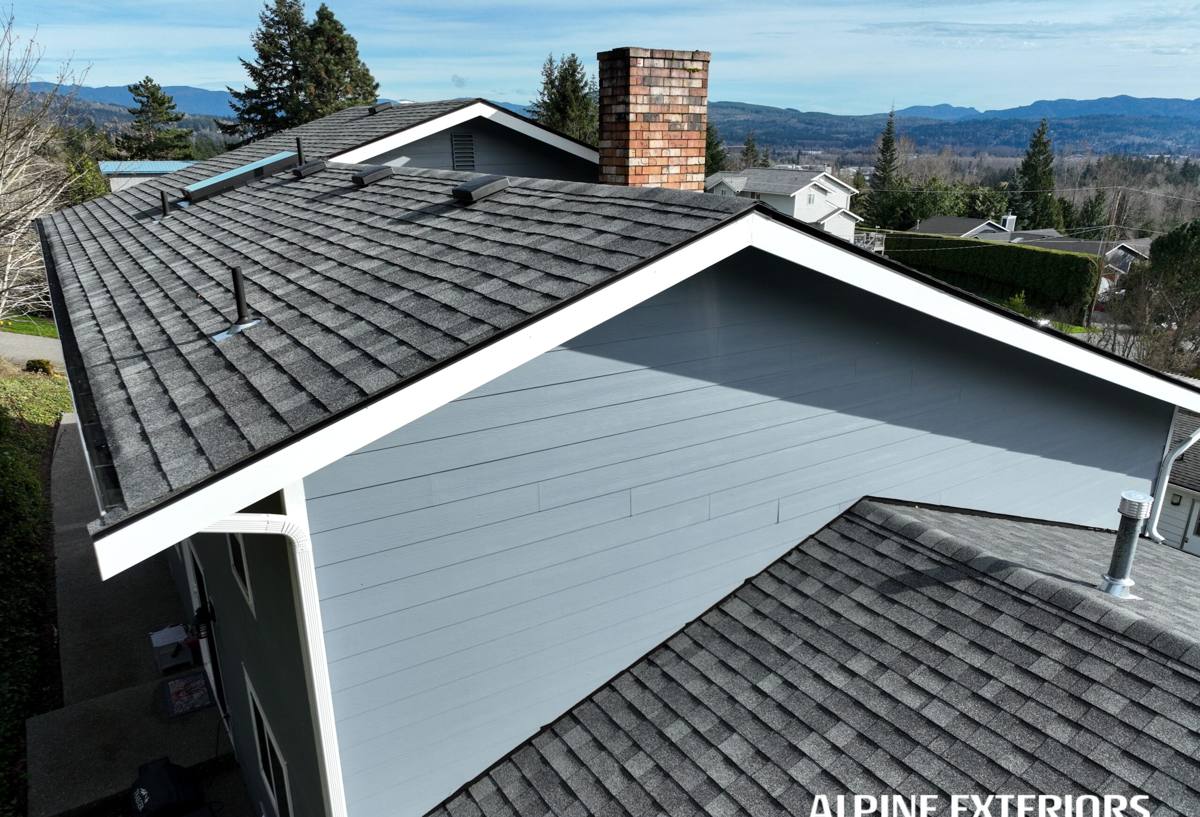
How Local Weather Actually Damages a Roof
It helps to understand the mechanics, not just the symptoms. Three regional factors do most of the damage on South Hill roofs.
Wind-Driven Rain and Flashing Failures
A properly installed roof sheds rain that falls straight down. Driving rain is a different problem — wind pushes water sideways and upward, forcing it under shingle edges, around vent boots, and behind flashing that was never designed to handle water moving in that direction. Over time, this is what causes leaks that show up nowhere near where the water actually enters. A stain on a bedroom ceiling might trace back to a flashing gap at the chimney or a valley twenty feet away, because the water traveled along the underlayment before it found a way through the deck.
Moss, Trapped Moisture, and Shingle Life
Whatcom County's moss season is long, and South Hill's tree cover only extends it. Moss doesn't just look bad — it holds moisture against the shingle surface, keeps the roof deck from drying out between storms, and lifts shingle edges as it grows, creating entry points for wind-driven rain. A roof that looks intact from the ground can have moss-related moisture damage well underway underneath. Salt-laden air moving in off the water accelerates corrosion on exposed metal — flashing, fasteners, and drip edge — which is often the first thing to fail during a windstorm even when the shingles themselves are still in decent shape.
Wind Load and Aging Materials
Storm damage rarely happens to a roof in isolation — it happens to a roof that was already weakened by sun exposure, moss growth, or age, and then gets pushed past its limit by wind or hail. That's why two roofs the same age can respond completely differently to the same storm.
Signs of Storm Damage Homeowners Often Miss
Not all storm damage is obvious. Some of the most costly repairs start as damage that looks minor or isn't visible from the ground at all.
- Granules collecting in gutters or at downspout outlets after a storm — a sign shingles are losing their protective surface
- Shingles that look "creased" or lifted at the edges rather than torn off completely
- Soft or spongy spots when walking the roof, indicating a saturated deck underneath
- Moss concentrated in valleys or north-facing slopes, where moisture lingers longest
- Rust streaks below metal flashing or fasteners
- Ceiling stains that appear or grow after a windy rainstorm, even a moderate one
- Gaps or separation at chimney, skylight, or vent pipe flashing visible from a ladder
- Debris or small branches lodged under shingle tabs after high wind
If any of these sound familiar, it's worth having the roof looked at before the next storm rather than after.
What a Correct Storm Damage Repair Actually Involves
A Real Assessment, Not a Guess From the Ground
A proper storm damage inspection means getting on the roof, not just scanning it with binoculars from the driveway. That includes checking the attic or accessible roof deck from underneath when possible, since water staining, dark spots on sheathing, or a musty smell can confirm a leak before it's visible on the surface. We also check flashing at every penetration — chimneys, vents, skylights — since these are the most common failure points in wind-driven rain events, not the open field of shingles homeowners tend to focus on.
Deciding Between Repair and Replacement
Most storm damage on an otherwise sound roof can be repaired: replacing damaged shingles, resealing or replacing flashing, addressing a compromised valley, or fixing a section of underlayment that got wet. But if the roof was already near the end of its service life, or if storm damage is widespread rather than isolated to one section, patching it can end up costing more over time than doing the job right the first time. We'll tell you honestly which situation you're in — our goal is a roof that holds up through the next storm season, not the cheapest fix that gets us off the ladder today.
Our Process for South Hill Storm Damage Calls
- Initial contact and photos. If you can safely get ground-level photos of visible damage, that helps us prioritize urgent calls, especially right after a storm event when demand spikes.
- On-site inspection. We walk the roof, check flashing and penetrations, and look at attic access points for signs of moisture intrusion.
- Written scope and estimate. You get a clear explanation of what's damaged, what's causing it, and what it takes to fix it correctly — no pressure to sign on the spot.
- Temporary protection if needed. If there's an active leak or exposed deck, we can tarp or temporarily seal the area to prevent further water intrusion while repairs are scheduled.
- Repair work. Damaged materials are replaced, flashing is resealed or rebuilt to shed wind-driven rain properly, and the area is checked for underlying moisture before we close it back up.
- Final walkthrough. We show you what was done and what to watch for going forward, particularly around moss management given how long the season runs here.
Cost Factors for Storm Damage Repair
Every roof and every storm is different, so we don't quote sight-unseen. But these are the factors that most affect cost on a typical South Hill repair:
| Factor | Why It Matters |
|---|---|
| Extent of shingle damage | A handful of missing shingles is a quick fix; widespread wind lift across multiple slopes takes more material and labor |
| Flashing condition | Corroded or improperly sealed flashing at chimneys, vents, and valleys is a common driver of repeat leaks and often needs replacing, not just resealing |
| Deck moisture or rot | If water has been getting in for a while, sections of plywood or sheathing may need to be replaced before new roofing goes on |
| Roof access and pitch | Steeper roofs, multiple stories, or difficult access add labor time and safety equipment needs |
| Moss removal | Heavy moss buildup often needs to be cleared and treated before an accurate assessment of the shingles underneath is possible |
| Material availability | Matching existing shingle color and style depends on age and manufacturer; older roofs may need a broader color-matching approach |
Generally, straightforward flashing and shingle repairs run in the low hundreds to low thousands of dollars, while repairs involving deck replacement or multiple damaged sections can run higher. We'll give you real numbers after we've actually seen the roof.
Materials and Approach — Built for This Climate, Not Just Any Climate
We use roofing materials and flashing details suited to a wet, wind-exposed Pacific Northwest climate, not a generic national spec. That means metal flashing components rated for coastal-influenced, salt-air exposure rather than the lighter-duty options that work fine in drier regions but corrode faster here. It also means paying close attention to underlayment quality and valley construction, since those are the parts of a roof that do the real work during a driving rainstorm — the shingles get the credit, but the flashing and underlayment are what actually keep water out.
Where we steer clients away from certain lower-cost shingle or flashing options, it's not because those products are inherently bad — it's because, in a high-moss, high-wind-driven-rain environment like South Hill, they carry a higher maintenance burden or shorter realistic service life than the trade-off is usually worth. We'll walk you through the reasoning so you can make an informed call, not just take our word for it.
A Practical Storm-Season Readiness Checklist
- Clear moss buildup before it spreads across a full slope, not after
- Keep gutters clear so water has somewhere to go during heavy rain
- Trim back tree limbs that overhang the roof, especially ones that could break in high wind
- Have flashing checked every few years, not just when a leak shows up
- Address small shingle damage promptly — a few lifted tabs are cheap to fix now and expensive to ignore
Why a Crew That Already Works South Hill Matters
Storm damage repair isn't just a technical skill — it's pattern recognition built from seeing the same roofs, the same weather exposure, and the same failure points repeatedly in one specific area. A crew that regularly works South Hill and the broader Sudden Valley area already knows which flashing details tend to fail first in this wind exposure, how aggressive the moss season is on north-facing slopes here, and what a normal versus a concerning attic moisture reading looks like for homes in this part of Whatcom County. That local pattern recognition is what turns a repair from a temporary patch into a fix that actually holds.
It also means faster response after a storm. When a wind event hits the area, we're already familiar with the terrain, the typical access challenges on South Hill properties, and how to prioritize urgent versus non-urgent calls without guessing.
Get a Straight Answer About Your Roof
If your South Hill home has visible storm damage, a slow leak you can't quite trace, or you just want an honest read on how your roof is holding up after another wet Whatcom County season, we're happy to take a look. The estimate is free, there's no pressure, and you'll get a clear explanation of what we find — whether that's a small repair or something bigger. Reach out using the form below to get started.