 Sudden Valley Siding
 New Roof Installation Built for Happy Valley Homes
Happy Valley sits inside the broader Sudden Valley community in Whatcom County, and homes here take a specific kind of weather beating year-round. Between the driving rain that rolls in off the water, the salt-laden air, and a moss season that seems to stretch longer every year, roofs in this pocket of Washington work harder than roofs in drier climates. When it's time for a new roof, the goal isn't just to put fresh shingles up — it's to install a roofing system that's actually matched to what this specific area throws at a house.
We install new roofs for homeowners throughout Happy Valley and the rest of Sudden Valley, and we've built our process around the conditions we see on these roofs every day: waterlogged valleys, moss-choked north slopes, and fascia boards that have taken on more moisture than they should have. This page walks through what a correct new roof installation looks like here, what it costs to do it right, and why local experience matters more than a low bid.
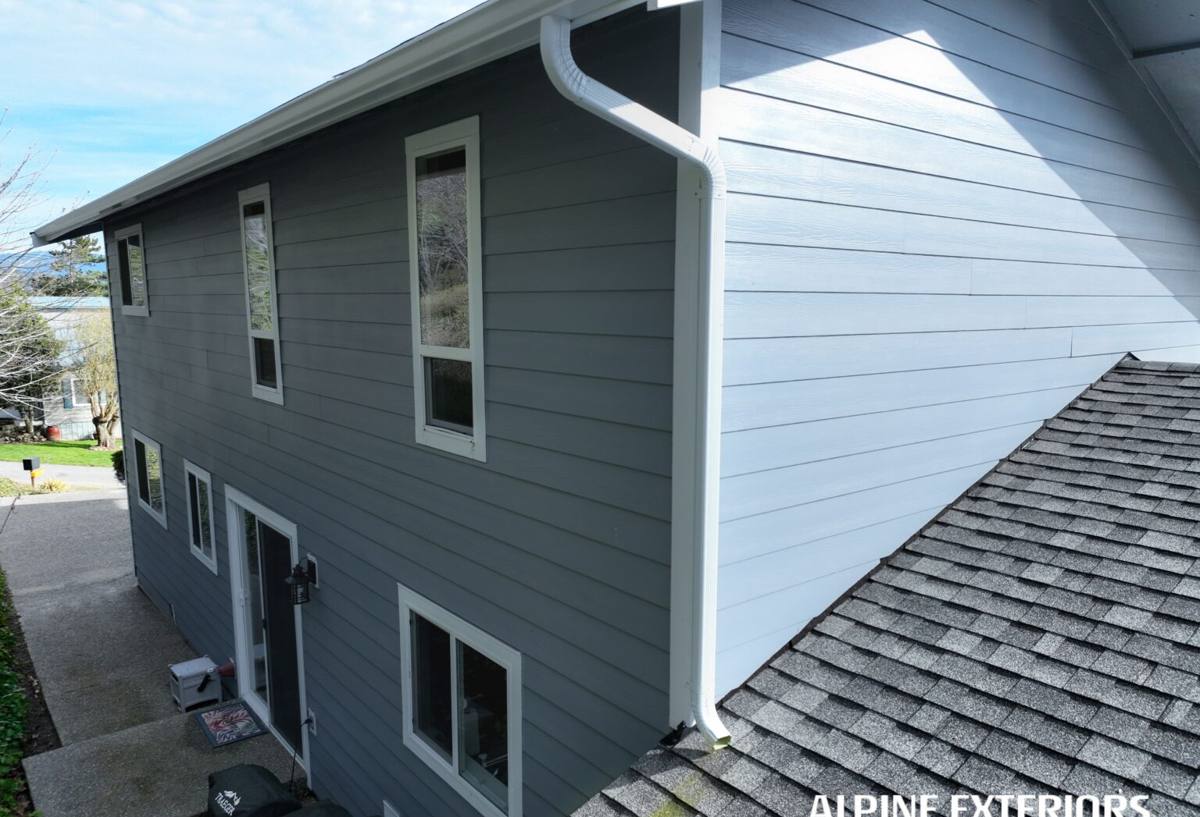
What Happy Valley's Climate Does to a Roof
Whatcom County doesn't get the kind of violent storms some regions do, but it makes up for that with sheer persistence. Long stretches of steady rain, high humidity, and limited direct sun on shaded lots create conditions that are slow and relentless rather than dramatic — and slow, relentless moisture is exactly what breaks a roof down over time.
The Three Big Stressors
- Salt air: Even homes set back from open water pick up airborne salt that accelerates corrosion on exposed metal — flashing, fasteners, gutter hardware, and vent caps age faster here than they would inland.
- Driving rain: Wind-driven rain doesn't just fall straight down — it gets pushed sideways under shingle edges, around poorly sealed flashing, and into any gap in the underlayment. A roof that would hold up fine in a calm rainstorm can still leak in a Whatcom County wind event.
- Moss season: Shaded, north-facing, and tree-covered sections of roof stay damp long after the rest of the roof has dried out. That sustained dampness is exactly what moss and algae need to establish, and once moss takes hold it lifts shingle edges and holds water against the roof deck.
None of these factors are unique to Happy Valley in isolation, but the combination — persistent moisture, salt exposure, and heavy tree cover on many lots — is what makes roofing here different from roofing a dry, open, inland property.
What a Correct Installation Looks Like Here
A new roof is only as good as the parts of the system nobody sees once the shingles are down. For this climate, we pay particular attention to a handful of details that matter more here than they would in a milder environment.
Underlayment and Ice/Water Barrier
We use a synthetic underlayment rated for extended moisture exposure rather than a basic felt product, and we install self-adhered ice-and-water membrane at eaves, valleys, and around every penetration. In a climate where the roof deck can stay damp for days after a storm, this second line of defense is what keeps a slow leak from becoming a rotted deck.
Flashing and Fasteners
Given the salt air, we spec corrosion-resistant flashing and fasteners rather than the cheapest compatible option. This isn't an upsell — it's a straightforward matter of the standard hardware corroding faster in this air than it would twenty miles inland, and replacing failed flashing later costs far more than installing the right material the first time.
Ventilation
Proper intake and exhaust ventilation keeps the underside of the roof deck dry and lets trapped moisture escape instead of condensing under the shingles. On homes with heavy tree cover and limited sun exposure, we check ventilation balance carefully — an underventilated attic in a damp climate is a slow path to deck rot, regardless of how good the shingles above it are.
Valley and Slope Detailing
Valleys carry the most water on any roof, and they're where driving rain finds its way in if the detailing is off. We install open or closed-cut valleys based on what the roof's pitch and layout call for, not on whichever method is faster, and we pay extra attention to shaded valleys where moss is most likely to take hold.
Our Installation Process
Every new roof follows the same core sequence, adjusted for the specific house and its exposure.
- On-site assessment: We walk the roof, check the deck condition, note shaded and moss-prone areas, and evaluate existing ventilation before quoting anything.
- Tear-off and deck inspection: Old roofing comes off down to the deck so we can actually see what's underneath — soft spots, rot, or prior leak damage get addressed before anything new goes down.
- Deck repair as needed: Any damaged sheathing is replaced. Installing new shingles over a compromised deck just hides a problem that will resurface.
- Underlayment and ice/water membrane: Installed per the moisture-management approach above, with extra coverage at vulnerable points.
- Flashing installation: New flashing at all valleys, walls, chimneys, and penetrations — we don't reuse old flashing on a new roof.
- Shingle or roofing material installation: Installed to manufacturer spec and local wind exposure, not a generic national standard.
- Ventilation check and adjustment: Intake and exhaust venting confirmed or corrected as part of the job, not treated as a separate add-on.
- Final walkthrough: We review the completed roof with the homeowner, including basic moss-prevention guidance for the specific shaded areas of that property.
Roofing Material Options for This Climate
Material choice matters less than correct installation, but some options handle Happy Valley's conditions more predictably than others.
| Material | How It Handles Local Conditions | Maintenance Consideration |
|---|---|---|
| Architectural asphalt shingles | Solid performance in driving rain when properly flashed; widely available algae-resistant options | Benefits from algae-resistant granules on shaded slopes |
| Standing seam metal | Sheds rain fast and resists moss better than any shingle product due to a smooth, low-friction surface | Requires corrosion-resistant fasteners and coatings given salt exposure |
| Synthetic/composite shingles | Good moisture resistance and dimensional stability in persistent damp conditions | Installation-sensitive; benefits from an installer familiar with the specific product line |
We don't push one material as universally "best" — the right choice depends on the roof's pitch, how much shade it gets, the home's architectural style, and the homeowner's budget and maintenance preferences. We'll walk through the honest trade-offs for your specific roof rather than defaulting to whatever's easiest to install.
Moss Prevention Built Into the Installation
Moss is a maintenance issue, not just an appearance issue — left alone, it holds moisture against the shingles and shortens the life of the roof. A new installation is the best time to get ahead of it.
- Zinc or copper strips installed near the ridge on moss-prone slopes, which release trace metal ions that discourage moss growth as rain washes over them
- Algae-resistant shingle products on shaded and north-facing sections
- Confirming gutters and downspouts are sized and positioned to actually clear water off the roof rather than letting it pond at the edges
- Basic homeowner guidance on when and how to safely clear debris from shaded valleys, since trapped leaves and needles are a major contributor to moss establishment
Cost Factors for a New Roof in Happy Valley
Every roof is different, and we won't quote a number without seeing the property, but a few factors consistently move the price up or down.
| Factor | Effect on Cost |
|---|---|
| Roof size and number of stories | More material and more complex staging on multi-story homes |
| Pitch and accessibility | Steep or tree-obstructed roofs take longer and require more safety setup |
| Existing deck condition | Rot or soft sheathing found during tear-off adds material and labor |
| Material choice | Metal and premium composite products cost more upfront than standard architectural shingles |
| Number of valleys, penetrations, and flashing points | More detail work means more labor and material at these vulnerable joints |
As a broad range, most straightforward asphalt shingle re-roofs on a typical Happy Valley home fall in the mid-to-upper five figures, with metal roofing and complex rooflines running higher. We'll give you a firm, itemized number after walking the actual roof.
Why a Local Crew Matters for This Job
A crew that regularly works Sudden Valley and Happy Valley has already seen how the tree cover, lake-adjacent air, and rainfall patterns in this specific area affect roofs over time. That's not something you get from a general contractor bid working off a national playbook — it shows up in small decisions, like which slopes get algae-resistant shingles by default, how valleys get detailed on shaded lots, and which fastener spec actually holds up against the local air.
It also matters for follow-up. A roof installed by a crew based near Whatcom County is a crew that can come back easily if a question comes up during the next wet season, rather than one that's a long drive away and hard to reach.
Signs Your Happy Valley Roof May Need Replacing
- Shingles that are cupping, curling, or missing granules in large patches
- Persistent moss growth that returns quickly after cleaning
- Daylight visible through the attic roof deck
- Soft or spongy spots when walked on, indicating deck damage underneath
- Leaks or staining on interior ceilings, especially near valleys or chimneys
- A roof approaching or past the manufacturer's expected service life for its material type
If your roof is showing any of these signs, or you're simply planning ahead, we're happy to take a look and walk you through what we see — no pressure, no obligation. Reach out using the form below for a free estimate on your Happy Valley roof.