 Sudden Valley Siding
 Asphalt Shingle Roofing Built for Alger's Weather
Homes in and around Alger sit in one of the harder climates in Western Washington for a roof to age well in. You've got moisture rolling in off the water and the lowland fog that settles into the valleys, driving rain that comes in sideways during winter storms, and long stretches of the year when shaded roof slopes barely dry out between rain events. That combination is exactly what shortens the life of a poorly installed asphalt shingle roof and exactly what a correctly installed one is built to handle. This page covers what that actually means in practice — not marketing language, just what we look at, what we install, and why the details matter more here than they would in a drier climate.
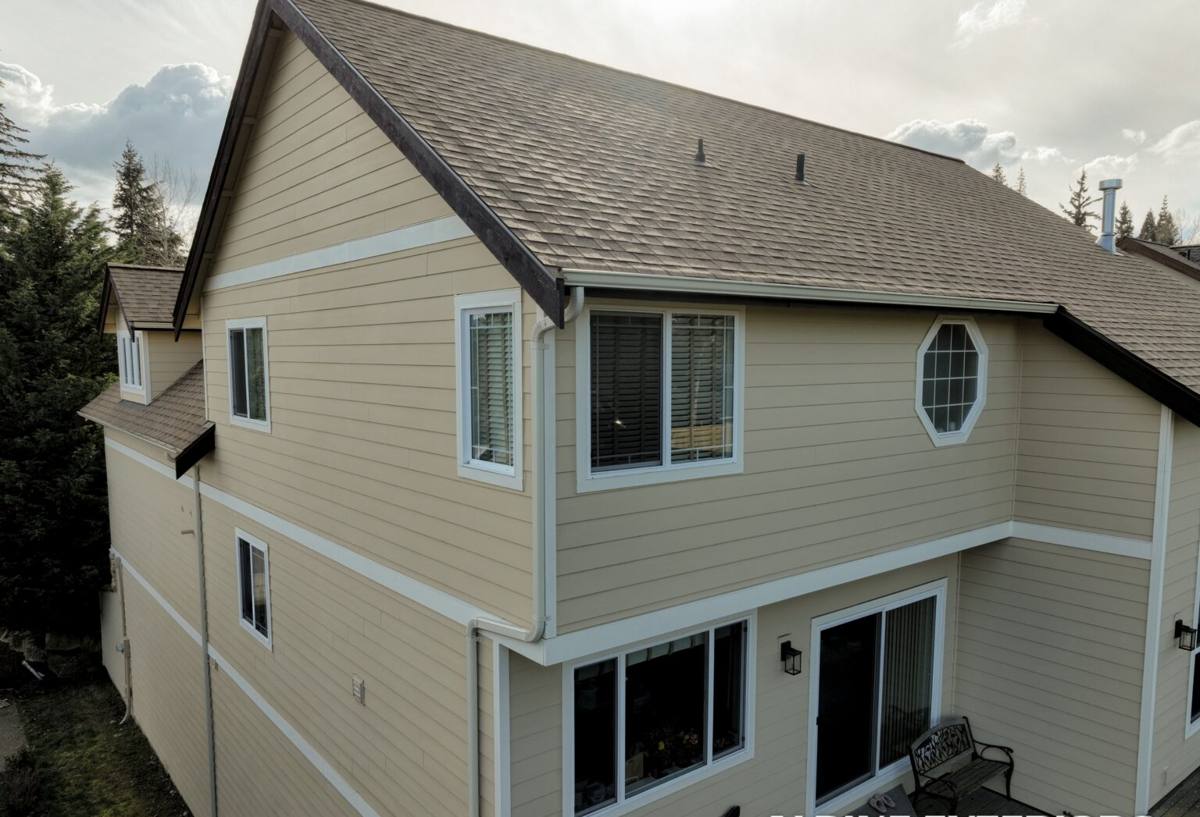
What This Climate Does to a Shingle Roof
Asphalt shingles are a proven, durable roofing material almost everywhere in the country, including here. The failures we see in this area are almost never about the shingle itself — they're about installation shortcuts that don't show up as problems until a few wet seasons have gone by. Three climate factors do most of the damage over time:
Persistent Moisture and Moss
North-facing and heavily shaded slopes in this area can stay damp for days after a storm, especially under tree cover. That moisture is what moss and algae need to get established. Once moss roots into the granule layer, it lifts shingle edges, holds water against the roof deck, and accelerates wear well beyond what sun and weathering alone would cause.
Wind-Driven Rain
Storms coming off the water don't just drop rain straight down — they push it sideways and upward under shingle edges, around vents, and into any flashing that wasn't lapped correctly. A roof that would be fine in a calm rain can leak in a wind-driven one if the underlayment and flashing details weren't done right the first time.
Salt Air and Metal Corrosion
Being close enough to the water to catch salt-laden air matters more for the metal components of a roof — flashing, fasteners, vent housings — than for the shingles themselves. Lower-grade or improperly coated metal corrodes faster here, and once flashing starts to go, water finds a way in regardless of how good the shingles above it look.
What a Correct Installation Actually Involves
A roof that's going to hold up under these conditions is built in layers, and every layer has a job. Skipping or shortcutting any one of them is where most premature failures start.
- Deck inspection and repair — any soft, delaminated, or water-damaged sheathing gets replaced before anything new goes down, not covered over.
- Ice and water shield at vulnerable points — eaves, valleys, and roof-to-wall transitions get a self-adhering waterproof membrane, not just felt paper.
- Synthetic underlayment across the field — a water-resistant barrier under the shingles that still lets any trapped moisture in the attic escape.
- Properly lapped step and counter-flashing — around chimneys, skylights, and wall intersections, installed in the correct sequence with the shingle courses, not caulked over as a shortcut.
- Balanced attic ventilation — intake at the eaves and exhaust at the ridge, sized to the attic volume, so moisture doesn't condense against the underside of the deck.
- Algae-resistant shingles on shaded slopes — granules treated to resist the growth that plain shingles pick up quickly under tree cover.
- Corrosion-resistant metal throughout — flashing, drip edge, and fasteners rated for coastal exposure rather than standard-grade material.
Choosing the Right Shingle Type
Not every shingle product is worth the same tradeoffs on every roof. For most homes in this area, the decision comes down to how much sun exposure the roof gets, how steep the slopes are, and how long the homeowner plans to stay in the house.
| Shingle Type | Typical Lifespan Here | Best Fit | Considerations |
|---|---|---|---|
| 3-tab asphalt | 15–20 years | Budget-focused re-roofs, simple gable roofs | Flat profile sheds water fine but holds moss faster on shaded slopes |
| Architectural (dimensional) asphalt | 25–30 years | Most homes in this climate | Heavier, thicker construction handles wind-driven rain and impact better |
| Impact-rated (Class 4) asphalt | 25–30+ years | Homes wanting stronger hail/debris resistance | Higher upfront cost, sometimes offset by insurance discounts |
| Algae-resistant variants | Same as base product | North-facing or tree-shaded slopes | Copper- or zinc-infused granules slow algae and moss regrowth |
We don't push a specific brand as the only option — most major manufacturers make a comparable architectural shingle, and the right pick usually comes down to warranty structure, color availability, and matching what performs well with the ventilation and underlayment system we're installing underneath it. What matters more than the label on the wrapper is whether the whole system — deck, underlayment, flashing, ventilation, shingle — was installed as a system rather than pieced together.
How We Approach a Project in Alger
1. On-Site Assessment
We walk the roof, check the attic for ventilation and moisture signs, and look at flashing points before ever quoting a job. A roof that looks fine from the driveway can have deck damage or inadequate ventilation that only shows up on inspection.
2. Straightforward Scope and Pricing
You get a written scope that spells out tear-off, deck repair allowances, underlayment type, flashing work, and the specific shingle product — not a vague one-line estimate that leaves room for surprise add-ons mid-project.
3. Tear-Off and Deck Repair
Old roofing comes off down to the deck so we can actually see what's there. Any damaged sheathing gets replaced, not skimmed over with a second layer.
4. Waterproofing and Underlayment
Ice and water membrane goes down first at eaves, valleys, and penetrations, followed by synthetic underlayment across the rest of the field.
5. Flashing and Ventilation Work
New step flashing, counter-flashing, and drip edge go in at every transition point, and intake/exhaust ventilation gets corrected if the existing setup is undersized or unbalanced — this is one of the most commonly skipped steps on re-roofs and one of the most consequential.
6. Shingle Installation and Final Walkthrough
Shingles go on to manufacturer spec for nail placement and exposure, and we walk the finished roof with the homeowner before calling the job done.
Signs Your Current Roof Needs Attention
Because shingle roofs in this climate fail gradually, most homeowners don't catch problems until there's an active leak. These are the earlier warning signs worth acting on:
- Moss or dark streaking concentrated on north-facing or shaded slopes
- Granules collecting in gutters or at downspout outlets
- Shingle edges curling, cupping, or lifting
- Soft or spongy spots when walking the roof
- Daylight visible through the attic roof deck
- Rusty streaking around flashing or vent stacks
- Interior ceiling stains near exterior walls or valleys
Maintenance That Actually Extends Roof Life
A correctly installed roof still needs occasional attention in a climate with this much moss pressure. The maintenance that matters most isn't complicated, but it's easy to let slide:
- Clear moss growth before it roots into the granule layer — soft washing or manual removal, not pressure washing, which strips granules
- Keep gutters clear so water isn't backing up under the lowest shingle course
- Trim back overhanging branches to cut down on shade and debris buildup
- Have flashing and vent boots checked periodically, since these are the components most likely to fail before the shingles do
What Drives the Cost of a Re-Roof
| Factor | Why It Matters |
|---|---|
| Roof size and pitch | Steeper roofs take longer to work safely and require more fall protection |
| Deck condition | Rotten or delaminated sheathing found during tear-off adds material and labor |
| Layers being removed | Multiple existing layers cost more to strip and dispose of than a single layer |
| Shingle class chosen | 3-tab, architectural, and impact-rated products carry different material costs |
| Flashing and ventilation scope | Chimneys, skylights, and undersized attic ventilation add labor beyond the basic shingle install |
| Access and site conditions | Steep driveways, tree cover, or tight lot lines affect staging and disposal logistics |
Broad ranges for a typical single-family re-roof in this region generally run from the high single-digit thousands for a straightforward 3-tab job on a simple roof, up toward the higher end for a larger architectural or impact-rated install with significant deck repair. Every quote should be specific to your roof's actual condition, not a generic square-footage number.
Why a Crew That Works This Area Matters
A roofing crew that regularly works Alger and the surrounding Whatcom County communities has already seen how these roofs age — which slopes moss out first, which flashing details fail under wind-driven rain, and which ventilation setups leave attics too damp through the wet months. That's not something a crew based somewhere with a drier or milder climate necessarily accounts for by default. It shows up in the underlayment they choose, the flashing metal they spec, and whether ventilation gets treated as an afterthought or a core part of the job.
It also matters for accountability. A local crew is easy to reach if a question comes up after the job, and has a reputation in the community that depends on the roof still performing well several winters later — not just looking good on installation day.
Get a Straightforward Estimate
If your roof is showing moss, granule loss, or you're just planning ahead for a re-roof before the next wet season, we're happy to take a look and give you an honest read on what it needs. Reach out for a free, no-pressure estimate using the form below.